TL;DR:
- Spain and the United States offer very different immigration systems, lifestyles, and long-term opportunities.
- Spain stands out for its lower cost of living, excellent healthcare, safety, and overall quality of life.
- The U.S. generally offers higher salaries and stronger career prospects, but at a significantly higher cost.
- The right choice depends on your priorities: maximizing income and career growth or enjoying a balanced lifestyle.
- Before relocating, compare residency pathways, taxes, housing costs, and your long-term financial outlook.
Spain vs. the United States
Choosing between Spain and the United States means choosing between two very different approaches to work, lifestyle, and immigration.
The United States has long attracted ambitious professionals with its high salaries, dynamic job market, and opportunities for career advancement. Spain, on the other hand, appeals to those seeking a healthier work-life balance, a pleasant climate, excellent public services, and a family-friendly environment.
Both countries remain popular destinations for relocation, but the better option ultimately depends on your goals. If career growth and earning potential are your priorities, the U.S. may offer greater opportunities. If you’re looking for stability, affordability, and a higher quality of life, Spain is often the stronger choice.
Planning to move to Spain?
The Alegria team can help you find the right property, navigate the paperwork, and choose the residency option that best fits your situation.
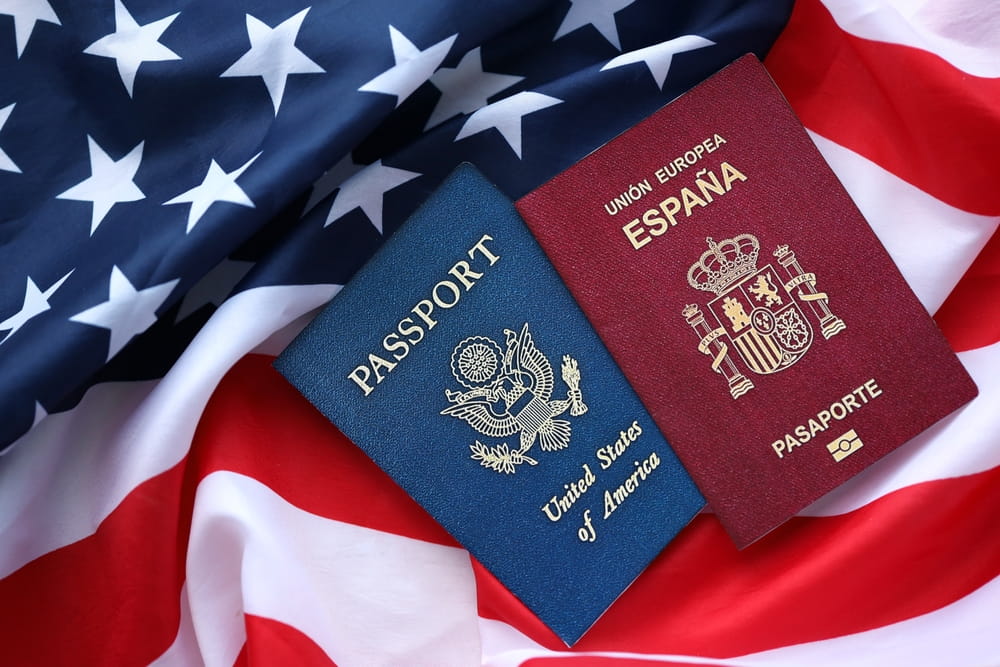
Spain vs. the United States: Immigration Pathways and Residency Options
The two countries take fundamentally different approaches to immigration, both in terms of accessibility and long-term residency.
Spain offers several well-established pathways for foreign nationals wishing to live in the country.
- Non-Lucrative Visa (NLV): Designed for financially independent individuals who do not intend to work in Spain. Applicants must demonstrate sufficient financial resources, obtain comprehensive private health insurance, and provide a clean criminal record. The initial permit is valid for one year and can be renewed. After five years of legal residence, permanent residency becomes available.
- Digital Nomad Visa: Introduced in 2023, this residence permit allows eligible remote workers and freelancers employed by foreign companies or clients to live in Spain. Applicants must meet minimum income requirements, provide proof of remote employment, and maintain health insurance. Applications submitted from within Spain may qualify for an initial residence permit of up to three years, with permanent residency possible after five years of continuous legal residence.
- Entrepreneur and Self-Employed Residence: Intended for entrepreneurs and freelancers launching a business in Spain. Approval depends on the viability of the business plan and its expected economic contribution.
- Student Visa: Available to international students enrolled in Spanish educational institutions. It allows long-term study and limited part-time work while studying.
- Investment Routes: Spain’s real estate Golden Visa program closed to new applicants in 2025. Some investment-based residence options remain available under specific legal frameworks, although they are considerably more limited than before.
Spain also offers a clear long-term path toward permanent residency and citizenship. In most cases, permanent residency is available after five years of legal residence, while citizenship may be obtained after ten years, subject to language and integration requirements.
The United States, by contrast, operates a more competitive immigration system that often depends on employer sponsorship, family relationships, or substantial investment.
- Employment-based visas, particularly the H-1B program, are subject to annual quotas and lottery selection, making them highly competitive. Transitioning to permanent residency can take several years depending on visa category and country of birth.
- EB-5 Investor Program requires a substantial qualifying investment and job creation, with processing times that may extend over several years.
- Family-sponsored immigration remains an important pathway but often involves lengthy waiting periods.
- Student visas (F-1) allow international students to study in the U.S., but they do not provide a direct path to permanent residency and offer only limited post-graduation work opportunities.
Overall, Spain’s immigration framework is generally considered more accessible for retirees, remote workers, and internationally mobile professionals, while the U.S. system is primarily geared toward employer-sponsored immigrants, investors, and close family members of U.S. citizens or permanent residents.

Spain vs. the United States: Cost of Living
Cost of living is one of the biggest differences between the two countries.
According to international databases such as Numbeo, everyday expenses in the United States are approximately 36% higher than in Spain on average, while rental prices are nearly 67% higher. Healthcare, education, childcare, and many personal services also tend to cost substantially more in the U.S., with some categories exceeding Spanish prices by 50% or more.
A family of four typically spends around €3,700 per month before rent in the United States, while a single person needs approximately €1,040 for basic monthly expenses. Equivalent living costs in Spain are generally much lower.
Although average salaries are considerably higher in the United States, those higher incomes are offset by more expensive housing, healthcare, transportation, insurance, and education. Spain’s lower overall living costs and comprehensive public services often allow residents to enjoy a comfortable lifestyle while spending significantly less each month.
For retirees, families, and remote professionals looking for long-term financial stability, Spain frequently offers better value for money.
Thinking about buying property in Spain?
Browse the latest homes for sale across Spain and compare prices by region.
Spain vs. the United States: Quality of Life and Safety
Spain consistently ranks among Europe’s most desirable countries for quality of life. Its Mediterranean climate, relaxed pace of life, generous vacation culture, and strong public healthcare system contribute to high levels of overall well-being. International rankings, including the World Happiness Report, regularly place Spain among the countries with high life satisfaction.
Quality of life in the United States varies much more significantly depending on location, income level, and profession. Major economic centers such as California, New York, and Texas offer exceptional career opportunities, but they are also associated with higher living costs, longer working hours, and increased levels of stress.
Safety is another important consideration. Spain is widely regarded as one of the safest countries in Europe, with relatively low rates of violent crime. The United States presents a much more varied picture, with safety levels differing considerably between cities, neighborhoods, and states. As with any large country, choosing the right location plays a major role in overall quality of life.
Real Estate
In Spain, housing remains more affordable outside Madrid and Barcelona, especially in coastal towns, mid-sized cities, and inland regions. Residents can usually access mortgages on relatively clear terms, while non-residents may also qualify, although with slightly higher rates and lower financing limits. The market is generally stable, although prices continue to rise in high-demand tourist areas.
In the United States, property affordability depends heavily on location, income, credit history, and the buyer’s FICO score. High property taxes, insurance costs, and prices in major coastal and metropolitan markets can make home ownership difficult without a strong financial profile.
Overall, housing in Spain is significantly more affordable than in the U.S. Rental prices are also lower, making Spain a more accessible option for long-term living despite lower average salaries.
- Rent: renting a home in Spain is, on average, considerably cheaper than in the United States.
- Buying property: the average price per square meter in Spain remains far below the level seen in many U.S. metropolitan areas, especially compared with New York, San Francisco, Los Angeles, or Miami.
In the premium segment, U.S. buyers are among the most active foreign purchasers in Spain and often spend more per square meter than the average international buyer.
In major Spanish cities such as Madrid, apartments of 100–140 sq. m may start from around €600,000, while larger houses, villas, and chalets outside the city can often be found from approximately €300,000–€350,000, depending on the location, condition, and amenities.
In major U.S. cities, higher salaries are often offset by extremely high rent and purchase prices. In New York, San Francisco, and other high-demand markets, housing costs can take up a very large share of monthly income, reducing financial flexibility even for well-paid professionals.
See also:

Healthcare System
Spain has a universal public healthcare system, the Sistema Nacional de Salud, funded mainly through taxes. It provides broad coverage for residents and is known for its strong medical standards, accessible primary care, and relatively low out-of-pocket costs. Many residents also choose private insurance to access shorter waiting times and a wider choice of specialists.
Private health insurance in Spain is comparatively affordable. Depending on age, coverage, deductible, and insurer, monthly premiums may range from around €30 to €230 per person.
Approximate monthly private insurance costs in Spain:
- Under 30–35 years old: €26–€60
- 35–50 years old: €50–€100
- Over 65: €79–€250
- Family plan, two adults and two children: €90–€270
The United States has a mixed healthcare system where private insurance plays a central role. Medicare covers many people aged 65 and older, while Medicaid supports low-income residents. Many working-age adults rely on employer-sponsored insurance or purchase individual plans through the Health Insurance Marketplace.
U.S. healthcare is highly advanced, but it is also among the most expensive in the world. Even with insurance, patients may face deductibles, copays, and other out-of-pocket costs. If insurance is not provided by an employer, monthly premiums for one adult may range from around $250 to $600, while family plans often start at approximately $1,000 per month.
Education
In Spain, public preschool from age three and public school education are free and generally accessible to foreign families. Many schools have experience integrating international children, especially in regions with large expat communities.
University tuition in Spain varies depending on the region, institution, and degree level, but it is generally far more affordable than in the U.S.
- Public universities, bachelor’s degree: from around €680 to €3,000 per year
- Public universities, master’s degree: from around €1,000 to €3,500 per year, although some programs may cost more
- Private universities: from around €5,000 to €25,000 per year
In the United States, higher education is significantly more expensive. Annual tuition can range from around $15,000 to more than $90,000, depending on whether the university is public or private, the student’s residency status, the program, and the institution’s prestige.
The Ivy League refers to a group of eight highly selective private universities in the northeastern United States, including Harvard, Yale, Princeton, and Columbia. These institutions are known for academic excellence, global reputation, and high tuition fees.
- Tuition alone: typically around $50,000–$65,000 per year
- Total annual cost, including housing and meals: often up to $80,000–$90,000

Daily Life and Integration
Spain is often seen as an easy country to adapt to, especially for families. The mild climate, strong social culture, outdoor lifestyle, and international communities in regions such as the Costa del Sol, Valencia, Alicante, and Catalonia make daily life comfortable and welcoming.
The pace of life is generally less stressful than in the United States, and many newcomers value the balance between work, family, health, and leisure.
In the U.S., adaptation depends strongly on professional goals, income, and location. The culture is more individualistic and fast-paced, but it also rewards ambition and can offer exceptional opportunities for career growth and entrepreneurship.
Considering a move to Spain?
The Alegria team can help you find the right property, prepare the paperwork, and support your purchase at every stage.
Conclusion
For many expats, Spain is the better choice for a stable, balanced lifestyle focused on family, health, safety, and day-to-day comfort at a reasonable cost. The United States may be a better fit for those focused on maximum career growth, higher salaries, entrepreneurship, and professional competition.
If you are planning to relocate to Spain, it is worth getting professional legal and real estate support before making major decisions. The right guidance can help you choose the most suitable residence pathway, understand current requirements, avoid costly mistakes, and make the transition smoother.
Recommendation: always check the latest official information on government websites, such as Spain’s Ministry of Foreign Affairs and USCIS, as immigration rules can change.
FAQ
Is it easier to move to Spain or to the United States?
For many foreigners, Spain offers more accessible residency options, especially for financially independent applicants, remote workers, students, and families.
Where is the cost of living lower: Spain or the United States?
Spain is generally more affordable, especially when it comes to rent, healthcare, education, and everyday expenses.
Where is it easier for foreigners to buy property?
Spain offers a transparent property purchase process for foreign buyers, and both residents and non-residents may be eligible for mortgages.
Which country is safer for long-term living?
Spain is widely considered one of the safer countries in Europe and generally has lower levels of violent crime than many parts of the United States.
Which country is better for families?
Spain is often a better fit for families prioritizing safety, healthcare, education, and quality of life. The U.S. may be better for those focused primarily on career growth and higher earnings.
This article is for informational purposes only and does not constitute legal, tax, or financial advice. It is not a public offer.