There are places in Madrid where you arrive to run an errand and leave wishing you could stay a little longer. Salamanca is one of them. You walk along Calle Jorge Juan to drop off a document at the notary’s, an elegant older woman in a perfectly tailored coat passes you with her dachshund, and the smell from a bakery draws you inside. Forty minutes later, you’re sitting over coffee, wondering whether you could make this neighbourhood home.
Here’s a closer look at Salamanca: what kind of place it is, why people fall for it, and whether the price is worth paying.
The district dreamed up by an ambitious marquis
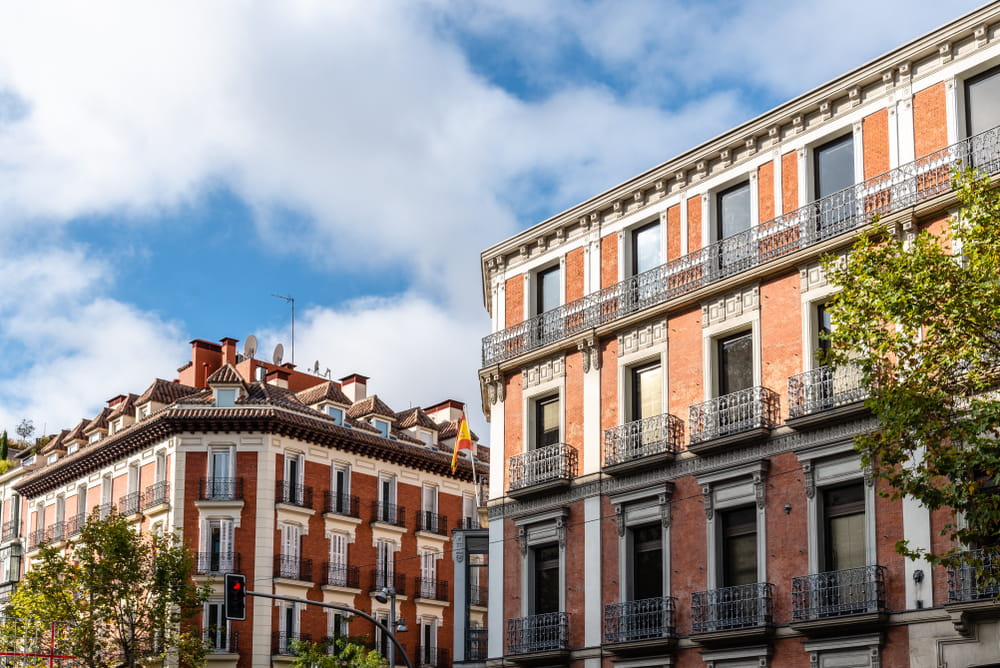
Salamanca did not come about by chance. By the middle of the 19th century, Madrid had outgrown its old boundaries, and plans were drawn up to expand the city beyond its former walls. The project was led by José de Salamanca y Mayol, an enterprising businessman with big ambitions and, by all accounts, a taste for risky ventures. He built railways, speculated on the stock market, and swung between great wealth and financial ruin. Against that backdrop, developing a new district seemed almost modest. Salamanca was laid out on a strict grid of straight streets, wide pavements and square blocks with inner courtyards. At the time, it was close to an architectural revolution.
You can still feel the logic of that plan today. It’s hard to get lost, and most places are easy to reach on foot. In a city whose centre can feel like a maze, that’s a real luxury.
Officially, Salamanca is a district (distrito), rather than a neighbourhood in the narrower sense. It contains six neighbourhoods (barrios), each with its own character. The differences between them are significant, so they’re worth looking at individually.
What life is like here
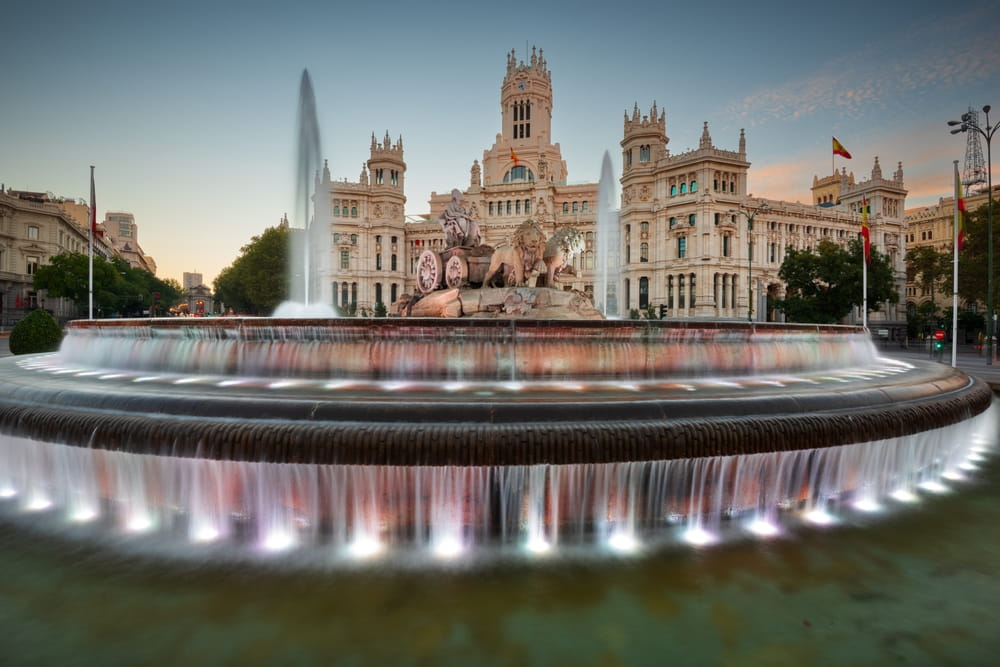
Mornings in Salamanca start at an unhurried pace. Boutique staff open their displays along Calle Serrano, home to Madrid’s famous “Golden Mile” of shopping. Doormen greet residents by name, while café terraces are already filling with people who have nowhere urgent to be. Around here, rushing can seem almost impolite.
By lunchtime, the district takes on a different energy. Madrid eats late, and Salamanca does so with particular enthusiasm. Restaurants along Lagasca and Jorge Juan and around Goya fill up quickly; on a Friday evening, getting a table at a popular place without a reservation is mostly a matter of luck. For something more casual, head to Mercado de La Paz. Open since 1882, it smells of fish, jamón and fresh bread. In one corner, Casa Dani makes its legendary Spanish omelette. There’s likely to be a queue, but it’s worth it.
Salamanca has plenty of greenery too. Retiro Park, Madrid’s green lung, is just around the corner. At weekends, everyone seems to head there: parents with pushchairs, dog owners, people with books and thermoses. Runners circle the lake, artists claim the benches, and you realise you live a few blocks from somewhere people cross the city to visit.
Getting around is easy. Several Metro stations and lines — including Serrano, Velázquez, Goya, Núñez de Balboa and Príncipe de Vergara — make most journeys straightforward. The airport is not far, and you can walk to the city centre if you have comfortable shoes and a little patience.
Schools, private clinics, sports clubs, galleries and antique shops are all within easy reach. What you won’t find is the quiet of a remote village. Despite its greenery, Salamanca is very much an urban neighbourhood: lively, busy and full of things going on. Anyone looking for peace and quiet broken only by birdsong may prefer somewhere else.
Want to compare Salamanca with other parts of the capital? Take a look at our guide to Madrid’s neighbourhoods.
Six neighbourhoods, six different characters
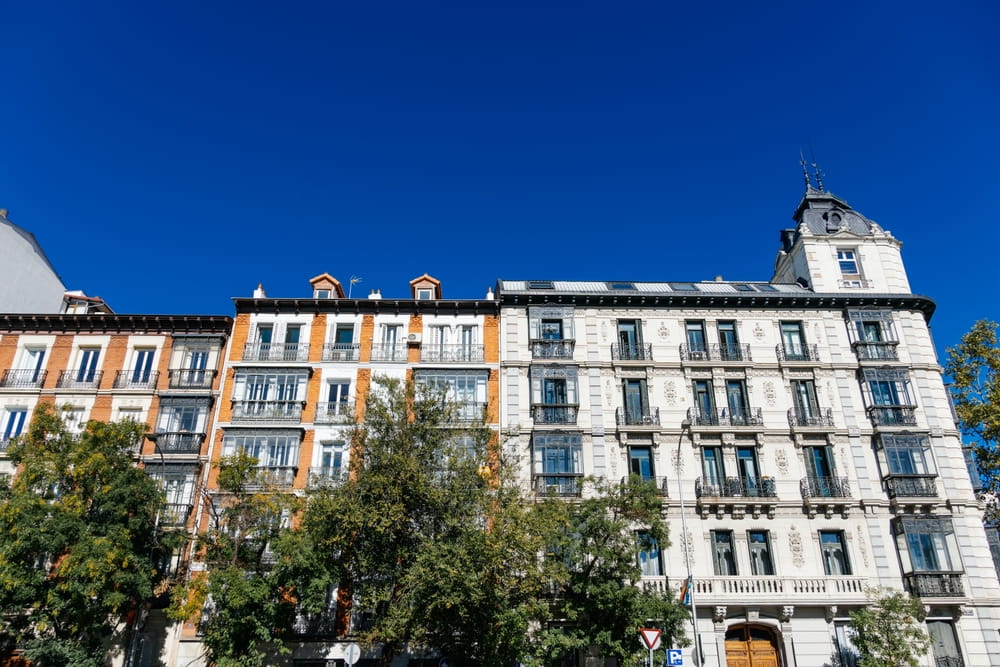
It’s easy to miss the finer distinctions if you think of Salamanca as one place. The district is made up of six different neighbourhoods, each with its own feel.
Recoletos
The oldest and most prestigious of the six. It is home to the National Library, elegant palaces, grand mansions and historic apartment buildings. This is for people who want more than a flat — they want an address that makes others raise an eyebrow. The prices reflect that.
Castellana
Stretching along the avenue of the same name, Castellana draws in Madrid’s business crowd. Its buildings are often more modern, with garages, doormen and spacious layouts. Some people find them more practical than the historic properties of Recoletos, and it’s hard to argue with that.
Goya
Busier and more accessible in feel, Goya is the district’s lively, shopping-focused side. It has good shops, plenty going on at street level and excellent transport links. The past year has shown just how popular it has become.
Lista
Another polished part of Salamanca, with well-kept streets, plenty of shops and an established middle- and upper-middle-class community. It’s calm, attractive and predictable.
Guindalera
For a long time, Guindalera lived in the shadow of its neighbours. It is more modest and down-to-earth, with comparatively more affordable prices. It is attracting more attention now, and for good reason: prices here have risen the most over the past year.
Fuente del Berro
The quietest and most homely of the six. Families choose it when they want to enjoy life in Salamanca without paying a premium for the high-end shopfronts.
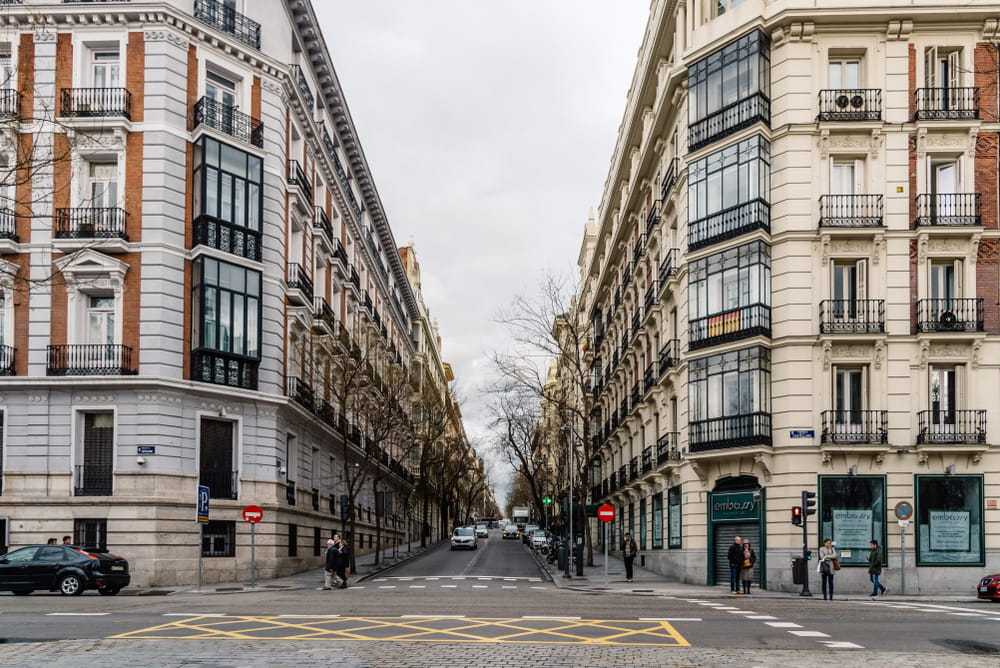
Photo: JJFarq/Shutterstock.com
What you can buy — and what you might fall for
A typical Salamanca flat is in a late 19th- or early 20th-century building. Think high ceilings — sometimes close to three and a half metres — decorative plasterwork, herringbone parquet, wrought-iron balconies and wide doorways. These homes are known as fincas regias, or grand period buildings, and that description is no marketing invention. Stand in a living room overlooking mature street trees, with daylight pouring through tall windows, and you begin to understand why people are willing to pay for the experience.
There is a more modern side to Madrid too. Buildings from the 1960s and 1970s, with lifts, garages, shared terraces and swimming pools, can be found in Castellana and Lista. Their layouts are often more practical, and community and utility costs can be higher. In return, you may not have to worry about repairing old floor structures or running a cable through a wall a metre thick.
There are newer developments as well. Older buildings are being renovated and transformed into high-end residences. Development sites are scarce in Salamanca, so these properties tend to sell quickly and at a premium.
One practical tip: a beautiful flat in a historic building can come with surprises — old wiring, pipes and floors, or no lift because nobody thought to install one in 1900. Look at the building’s condition, not just its vintage interior. A good lawyer and a technical inspection are not luxuries here; they can help you avoid expensive problems later.
Looking for a home in the capital? Browse the properties in our Madrid property catalogue. If you’d like help finding a suitable home and managing the purchase, explore Alegria’s property services.
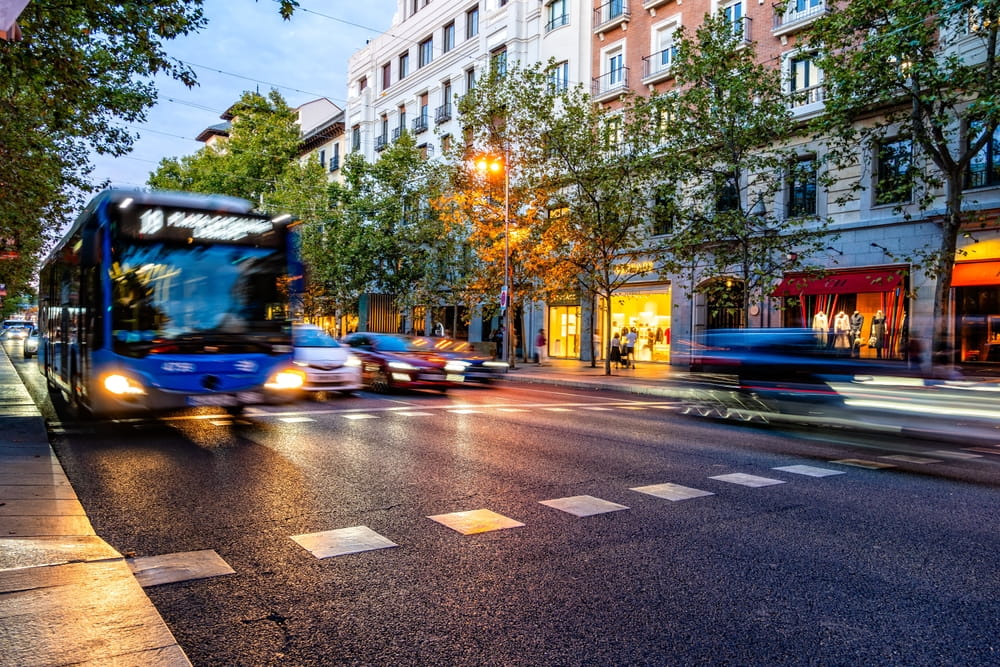
Photo: JJFarq/Shutterstock.com
How much does it cost? What the figures show
Now for the money — it’s hard to avoid the subject. According to Idealista, the average asking price in Salamanca in September 2026 was €10,865 per square metre. Get the calculator out: 100 square metres would cost close to €1.1 million. For some, that’s a fair price for a dream home; for others, it’s a reason to take a deep breath.
The trend is more interesting than the headline figure. Prices rose by 0.2% in a month, so they were almost flat. They fell by 0.9% over the quarter and by 1.2% over the year. The all-time high was recorded in March 2026, at €11,328 per square metre. The market is now 4% below that peak. It’s not a crash, more a breather after a long uphill run.
It’s worth looking at how prices got here. The long-term chart reads like a drama. In 2007, a square metre cost about €5,800. Then the financial crisis sent prices down, and by 2013–2014 they had fallen to around €4,000. Buyers who came in then have seen values almost triple over the following decade. Prices moved more steadily from 2015 to 2020; from 2022 onwards, the curve climbed sharply, reaching a ceiling of around €11,500.
Prices also vary considerably within the district, which is where things get interesting.
Recoletos
Still the most expensive neighbourhood, at €14,724 per square metre. Prices rose by just 0.8% over the year, which is understandable: when they are already sky-high, there is less room to accelerate.
Castellana
Prices stand at €11,923 per square metre. The neighbourhood reached its peak back in November 2025, at €12,329, and has since eased slightly.
Goya
Today’s standout, at €10,945 per square metre and a new record in September 2026. Prices rose by 1.9% over the month, 2.1% over the quarter and 2.7% over the year. The neighbourhood is gaining popularity, and buyers are responding.
Lista
Prices average €10,647 per square metre, just below the spring peak of €11,108.
Fuente del Berro
At €7,771 per square metre, with annual growth of 2.7%, this is one of the more affordable options in the prestigious Salamanca district.
Guindalera
At €7,336 per square metre, Guindalera has recorded the district’s strongest annual growth: 5.2%. If you’re wondering where prices are catching up fastest, this is the place to look.
As you can see, Salamanca is not all the same. The price gap between Recoletos and Guindalera is almost twofold. The neighbourhood name on the address may be the same, but the budgets are very different.
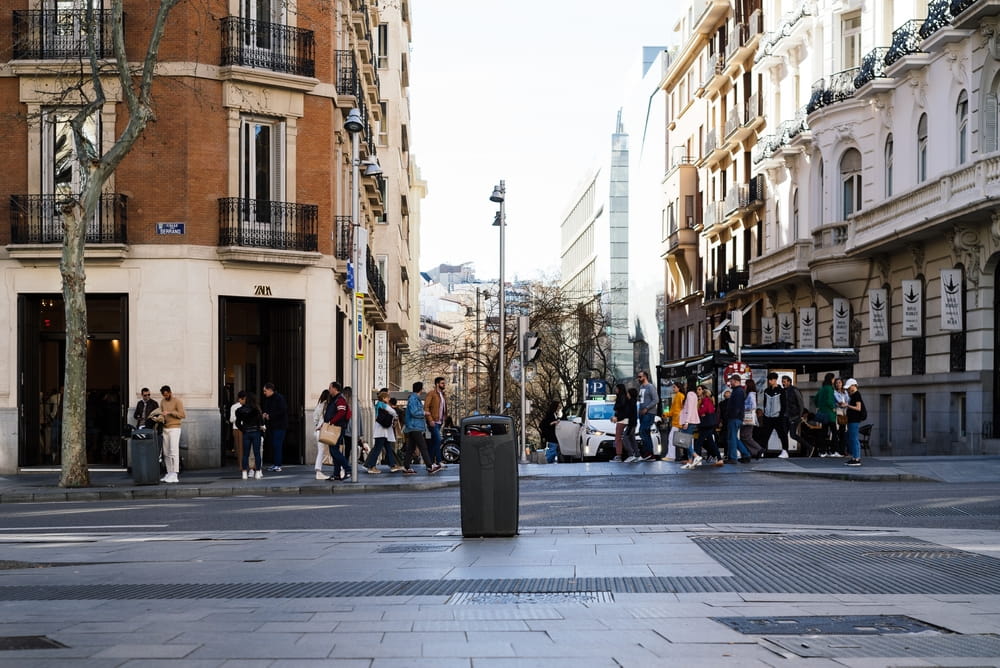
Photo: JJFarq/Shutterstock.com
Who Salamanca suits — and who it doesn’t
Salamanca suits people who love city life and don’t mind its pace. Those who want to step outside and find cafés, shops, galleries and people all around them. Those who value architecture and are happy to trade a little practicality for beauty. And those looking for a solid long-term asset: property here has held its value over time, and tenants are generally financially comfortable and able to pay reliably.
It may not suit anyone dreaming of rural quiet and a small plot with orange trees. Nor is it ideal for people with a limited budget who need a lot of space. And if you can’t stand the hunt for parking, be warned: finding a spot on the street here can be a real challenge.
A small tip if you’re considering Salamanca as a place to live: visit at different times — on a weekday morning, on a Friday evening and on a Sunday afternoon. The neighbourhood has so many moods that one visit won’t tell you everything. Then choose the part of it where you’d most like to linger.
At Alegría, we’ll put it this way: Salamanca is bound to charm you — we’d wager on the best tortilla in Madrid — and soon you’ll be looking for excuses to turn down one more of its streets. If you’d like to explore the area seriously, without rushing and with a good coffee in hand, get in touch. We’ll help you find a flat, run through the numbers carefully and flag any potential issues before they catch you by surprise. And yes, we’ll make time for tortilla too!
FAQ
Is Salamanca a neighbourhood or a district of Madrid?
Officially, Salamanca is a district (distrito) of Madrid. It contains six neighbourhoods: Recoletos, Castellana, Goya, Lista, Guindalera and Fuente del Berro.
How much does property cost in Salamanca?
According to Idealista, the average asking price in September 2026 was €10,865 per square metre. Prices vary considerably by neighbourhood: the figures cited in this article range from €7,336 per square metre in Guindalera to €14,724 in Recoletos.
Which Salamanca neighbourhood is the most expensive?
According to the figures cited for September 2026, Recoletos is the most expensive, averaging €14,724 per square metre.
Is Salamanca a good place for families?
The district has schools, private clinics, shops, transport links and green spaces nearby. Families seeking a quieter day-to-day setting might consider Fuente del Berro; the right choice depends on budget and lifestyle.
What should I check before buying a flat in an older building?
Look beyond the interior and check the building’s technical condition, including the wiring, plumbing, floors and whether there is a lift — and what condition it is in. It is worth instructing a lawyer and arranging a technical inspection before you buy.