Food and Wine as Part of Local Culture
Good day, dear readers. I’m Dmitry Kesadov, your wine guide, and this is one of our food columns.
Food and drink are serious matters. Our region has long been shaped by two professions in particular: fishing and farming. People in both fields have always understood the importance of food and supplies. Their livelihoods—and sometimes their survival—depended on them.
Of course, people from Alicante and Murcia have plenty of other talents. But visitors looking for a packed cultural itinerary are more likely to head to Madrid or Barcelona, or perhaps Málaga.
There is plenty to see here, too. The Ruta del Modernismo, for example, takes in not only major cities but also Elda and Novelda. In past centuries, the marble and spice trades brought prosperity to the area, helping its architecture flourish. Novelda is home to the Navarro family house, an example of early twentieth-century Modernisme, and the Gómez-Tortosa Modernist Museum, which reopened after restoration in 2026. We’ll return to that story another time. Elda has also been in the news: Lionel Messi has acquired the local football club, Eldense, and a sports complex for the city is under consideration. Messi has said he plans to develop the club and related projects.
Still, the Ruta del Modernismo and other cultural itineraries aren’t the only reasons to visit. The region also has Alicante wine routes, with visits to local wineries, the Gastro Alicante festival and other events that draw plenty of visitors. Most people come to enjoy the sea, food and wine. I say that openly because I believe food and wine are important parts of human life and world culture. Spain’s Mediterranean coast is a particularly special place for both.
Today, we’re talking about octopus, which is sometimes treated as a speciality of Galicia alone. In fact, the Mediterranean has known and valued it for centuries, and octopus fishing has a long history in our region, too.
That said, catching octopus isn’t for everyone. It’s a remarkable animal, with an ancient lineage and unusual behaviour. My wife and I once went octopus fishing off the coast of Cyprus. I still remember the look in the eyes of one adult octopus: intelligent, calm and almost forgiving towards the people who had come to catch it. After that trip, we decided not to fish for octopus again, though we still enjoy eating it.
So, where should you try pulpo, and what should you know before you order it?
Where to Try Pulpo on the Costa Blanca
The simplest option is to go to a restaurant—ideally one that specialises in octopus. In Spain, these places are called pulperías, from pulpo, the Spanish word for octopus.
Some pulperías serve little beyond octopus; others include it among a wider selection of dishes. Either way, it’s the star of the menu. Octopus has a special place in Spanish cooking and in Mediterranean food culture more broadly—not only in Spain, but also in Greece, Italy and Morocco. We’ve written more about the different kinds of Spanish bars and restaurants where you can explore local food in this guide.
When I first came to Spain in 1996, I spent my first two years ordering almost the same thing every time I ate out: beef entrecôte, fried potatoes and a bottle of red wine. Spanish meat and wine were very different from the versions I had known back home. I soon got used to them, but at first I was wary of prawns and other seafood. Many people feel the same about unfamiliar things from the sea. Octopus can be a good introduction: it is seafood, of course, but its texture and satisfying bite can feel a little closer to meat. Tuna sometimes plays a similar role.
If you’re looking for a pulpería on the Costa Blanca, head to Santa Pola and visit Narcea. The family of Antonio Monteserin moved there from Asturias more than twenty years ago and made the town their home. Santa Pola is less crowded than some of the region’s resorts. Its broad beaches and restaurants serving fresh fish make it an appealing choice for anyone who loves the sea and local food.
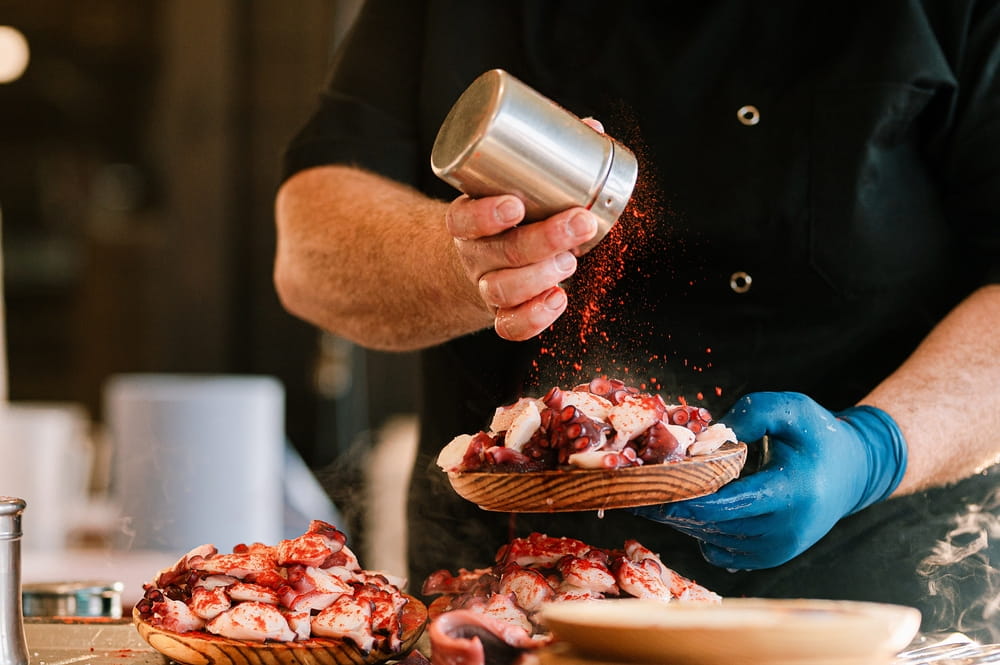
At Pulpería Narcea, order pulpo a la gallega—Galician-style octopus. Although Narcea specialises in pulpo, it is a full-service restaurant. At the bar, you’ll see a display of wooden and earthenware plates piled with the dish. It’s a popular order here.
One advantage of a restaurant with a clear speciality is that you don’t have to spend ages choosing. I remember the first time my wife and I went to one of Prague’s famous beer halls. We sat down and waited for a menu. The waiter soon arrived and set two large mugs of beer and a plate of roast beef on the table. That was what everyone came for; there was little else on offer.
Pulpo a la Gallega and How It Is Prepared
Galicia and Asturias are known for their distinctive food cultures, shaped by their geography, history and close ties to the sea. Their cuisines have retained many local traditions and are now appreciated throughout Spain, particularly for seafood, beef and vegetables. Galicians and their Asturian neighbours are also recognised experts in cooking octopus.
Galician-style octopus is prepared simply. First, it is tenderised, then dipped into boiling water three times—a step locals jokingly call “frightening the octopus”. It is then cooked in a copper pot and cut with scissors.
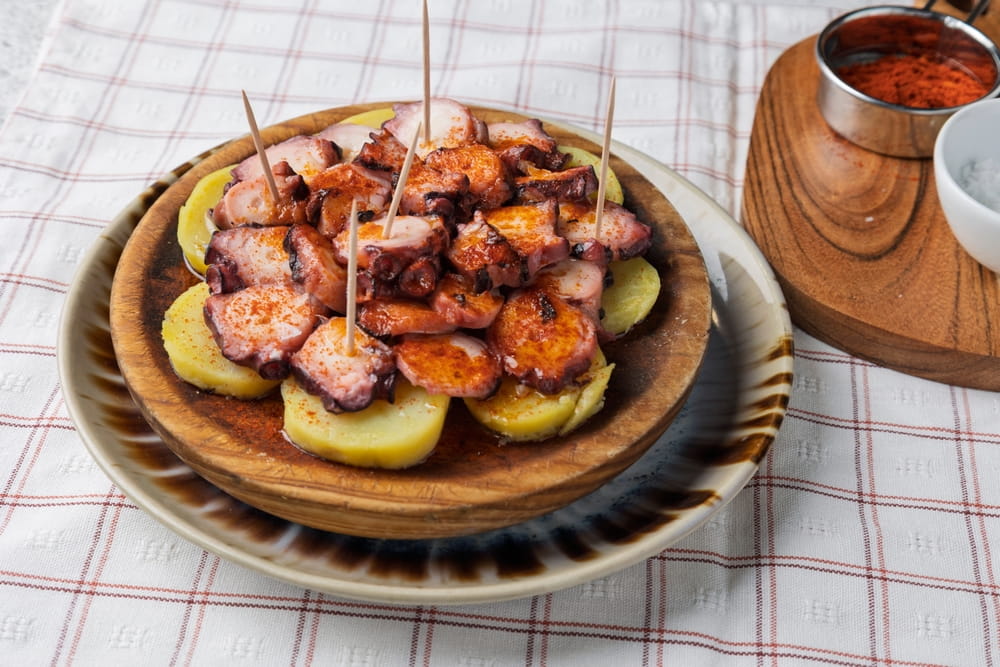
The dish is simple to serve, too: place the sliced octopus on a bed of boiled potatoes, then add coarse salt, fragrant sweet paprika and olive oil.
Of course, a pulpería may also serve baked octopus, other fish or a good cut of meat. Still, I recommend making octopus your first choice.
On the Costa Blanca, you’ll find octopus on the menu well beyond specialist pulperías. In Torrevieja, for example, octopus at Barlovento is something of a local favourite. People say that beer is one of the secrets of the restaurant’s cooking method. In Guardamar, Miguel Montesinos at MIMO prepares octopus using an old family recipe.
That doesn’t mean either version will necessarily be your favourite. My wife and I sometimes find that Barlovento is a little heavy-handed with the salt—perhaps that’s part of the restaurant’s old-school style. Octopus already has a pronounced sea-salty flavour, so some chefs add little or no extra salt. At MIMO, despite our respect for the chef and the traditional recipe, the octopus can sometimes seem a little dry to us.
Ultimately, it comes down to personal taste. Finding your favourite restaurant and your idea of perfect pulpo can take years.
How to Cook Octopus at Home
The other option is to cook octopus at home.
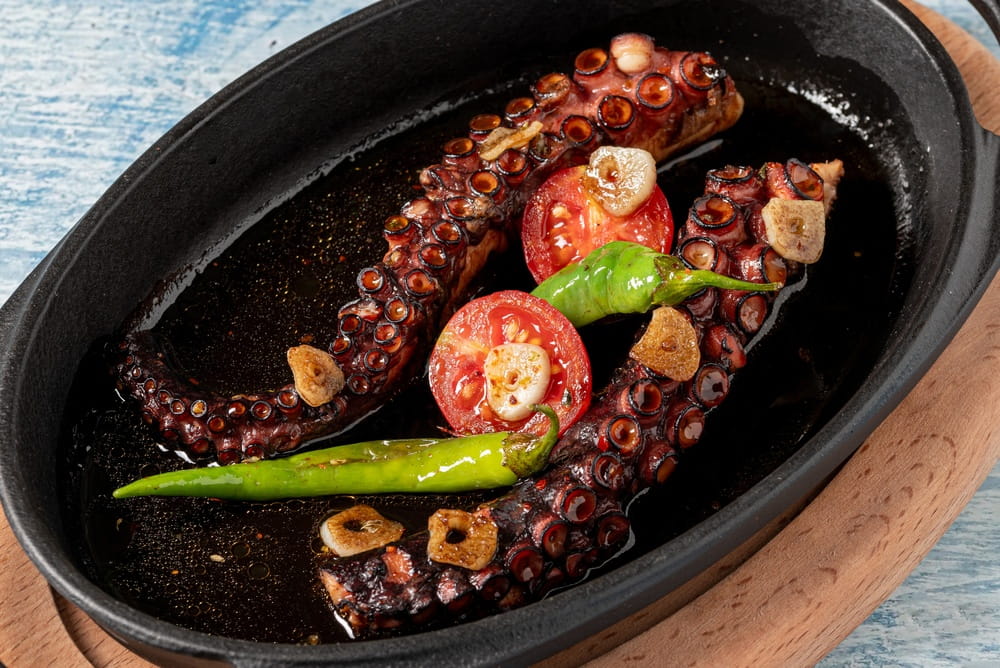
Once people discover how much they enjoy it, they’re often tempted to try cooking it themselves. The process can look deceptively simple, but things don’t always go to plan: the potatoes fall apart, the octopus turns rubbery and the paprika lacks aroma. Here are a few tips to help avoid the usual problems.
I became a real fan of octopus dishes back when I lived in Moscow. I first tried an octopus and potato salad at Semifreddo, the restaurant of Italian chef Nino Graziano. It was just around the corner from our office on Lev Tolstoy Street, on Rossolimo Street; later, it moved to nearby Timur Frunze Street. Nino Graziano is an exceptional chef. His restaurant Il Mulinazzo in Palermo was the first in Sicily to receive two Michelin stars. I tried that salad there and, naturally, wanted to recreate it at home.
I already knew my way around a kitchen, but octopus proved tricky. Thanks to my connections, I was able to ask the chef himself for advice. Nino told me that octopus was a familiar ingredient from his childhood, and that years of cooking it had given him an instinct for getting it right. He also made a point of buying from trusted suppliers: the quality of the ingredient is crucial.
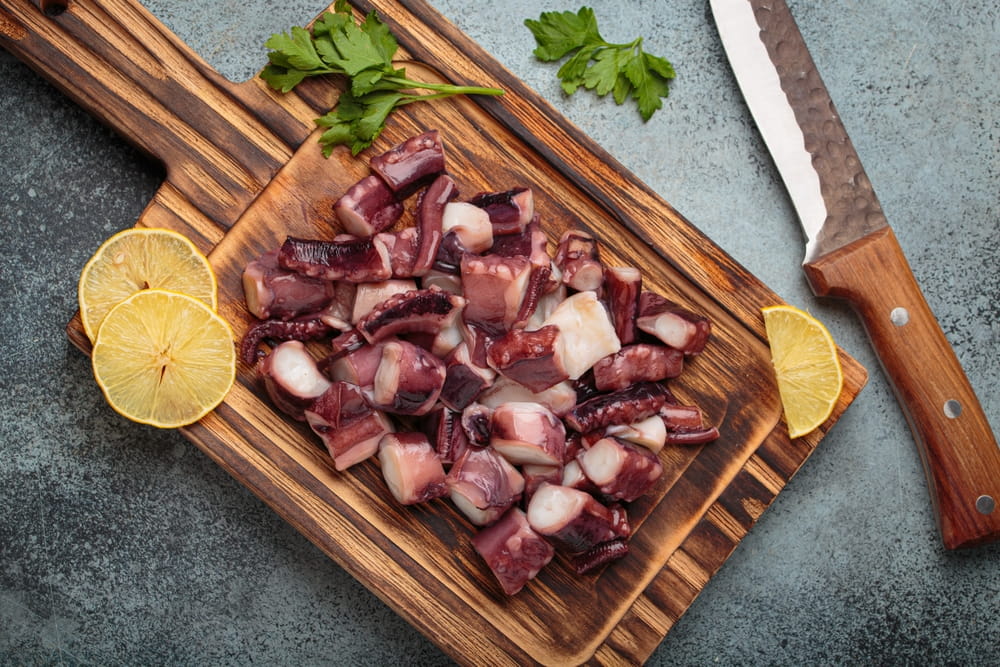
For a beginner, he offered a few basic guidelines. If the octopus is frozen, it will probably turn out tender if you thaw it slowly and properly. Bring a pot of water to the boil, add the octopus—if you like, you can use the Galician method of dipping the tentacles in and out of the boiling water three times—and cook it for around twenty minutes if it is medium-sized. A small octopus may need only ten minutes; cooking time for a larger one depends on its weight.
Fresh octopus usually needs tenderising first, unless your fishmonger has already done it for you. It will also take a little longer to cook. Add salt towards the end and keep the pot covered. An old tradition calls for dropping a wine cork into the pot, but it isn’t essential. The same goes for using a copper pot. With practice, you’ll get a feel for the right cooking time.
Some cooks use one of two methods: a quick boil, like the one described above, or a slow cook lasting more than an hour. The longer method takes experience, as overcooking can damage the texture.
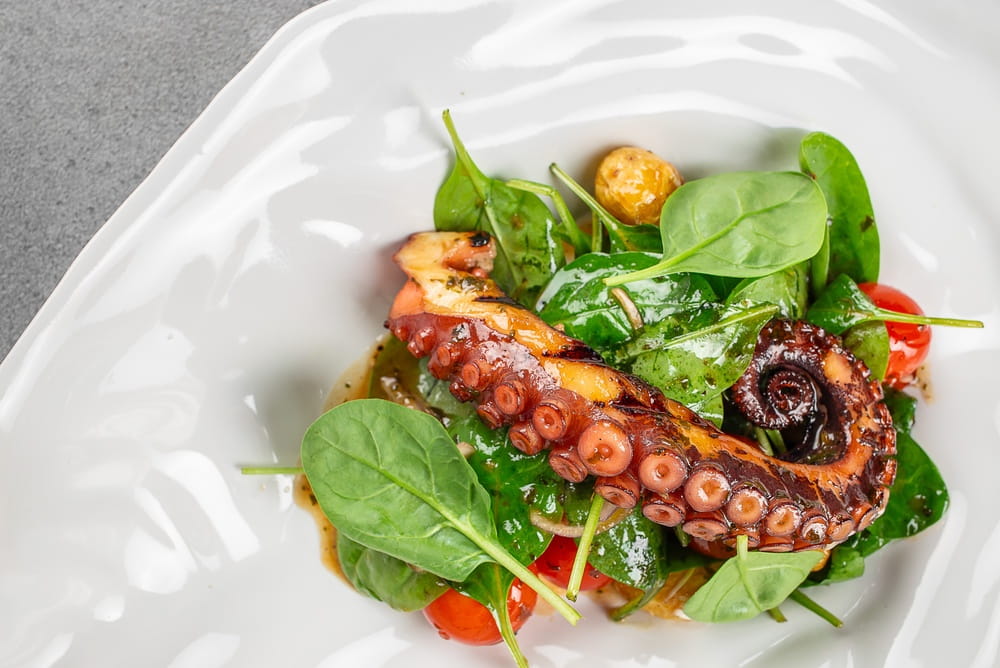
You can make things easier by buying octopus that has already been cooked. It goes well with beans, potatoes, sweet onions and capers, among other ingredients. Just don’t serve it cold: low temperatures can mute its flavour.
Octopus, Joël Robuchon and the Gourmet Race
Octopus is an important part of Mediterranean cooking, but its popularity has ebbed and flowed. Around fifteen years ago, it almost disappeared from restaurant menus in our region. It was an expensive ingredient, and not every kitchen knew how to handle it. Some restaurants overcooked it until it became dry, and a number of international visitors summed up their experience as “expensive and not very good”. As demand fell, many restaurants found it easier to take octopus off the menu than to persuade people to try it again. In recent years, it has made a comeback—boiled, baked, Galician-style and in many other forms.
One of the people who helped bring octopus back into the spotlight was chef Joël Robuchon. We often take a detour into a story in these columns, but we try to choose ones that connect with the subject. Even in the smaller towns and rural areas of our region, you can find ingredients and restaurants that are highly regarded by some of the most discerning people in the culinary world.
Joël Robuchon was one of the most celebrated chefs of his generation. In 1990, the Gault & Millau guide named him one of three “Chefs of the Century”. Over the course of his career, restaurants under his direction earned a total of 32 Michelin stars, and several of his establishments received the guide’s highest rating of three stars.
In an earlier column, we wrote about Robuchon’s role in the development of the gastrobar format. He said he was inspired by Spanish tapas bars, including the tradition of ordering small plates at the counter. He had seen this culture at the restaurants of his friends, the Castello family, who ran Piripi and Nou Manolín in Alicante. Dmitry Kesadov’s guide to Spanish bars and other places to eat and drink explores these formats in more detail.
Both restaurants remain highly regarded. Casto Copete, head of dining-room service at Nou Manolín, received Spain’s 2026 National Gastronomy Award for Best Dining-Room Management. He was presented with the award in Toledo on 9 November. Meanwhile, Piripi recently marked the end of an era: Antonio Lozano, who led the restaurant’s bar team for 35 years, retired. The messages of thanks from guests and colleagues show just how much he meant to them. Piripi’s counter is more than part of the furniture; it is central to the restaurant’s character.
Robuchon knew Alicante’s food culture from more than occasional visits. He had a home near Calpe and Moraira, and he had a genuine affection for Mediterranean cooking. He knew many Spanish chefs and worked actively with them: inviting them to his restaurants as guest chefs, promoting Spanish ingredients and organising competitions and other culinary events.
One such event was the Gourmet Race, which Robuchon organised in Moraira with friends. Each autumn, a small fleet set out to celebrate local food traditions. In 2012, the crews of the competing yachts first prepared dishes during the sail. Tuna was the main ingredient in the inaugural competition. In 2016, the challenge was to cook octopus in the traditional style—the way it might have been prepared for a fishing crew aboard a boat in earlier times.
The event was designed as an opportunity to meet, share good food and have fun, but the competition was taken seriously: a jury chose the best dish and winning boat. The judges included well-known chefs, among them Dani García, whose restaurants held two Michelin stars at the time, and Alberto Ferruz of Bon Amb, also a two-star chef, as well as journalists, critics and food enthusiasts.
The “regatta with a culinary twist” also brought together the Moll family of restaurateurs from La Sort, who became close friends of Robuchon, and the Petit family, producers of Masía El Altet olive oil. Robuchon thought highly of this oil from Alicante province and used it in his restaurants. He also introduced it to other chefs.
A Finishing Touch: Olive Oil
There’s a reason we’ve been talking about olive oil. Even when the octopus is cooked just right and sprinkled with paprika, the dish isn’t finished until you drizzle it with good olive oil. Masía El Altet, from Alicante, is one option with international awards to its name. Another oil will work just as well, as long as it is genuinely high quality.
For now, we’ll say goodbye to octopus and Joël Robuchon, who died in 2018. The Gourmet Race is still held every year. The thirteenth edition took place on 3 October 2026, with sea bass (lubina) as its featured ingredient. Piripi and Nou Manolín continue to welcome diners, and octopus remains one of the great ingredients of Mediterranean cooking.
Until next time, and more notes on food and wine.
Frequently Asked Questions
What is a pulpería?
A pulpería is a restaurant specialising in octopus dishes. The name comes from the Spanish word pulpo, meaning “octopus”.
Where can you try pulpo on the Costa Blanca?
This article recommends Pulpería Narcea in Santa Pola, Barlovento in Torrevieja and MIMO in Guardamar. Each restaurant has its own style, so it’s worth trying more than one.
What is pulpo a la gallega?
It is Galician-style octopus, traditionally served with boiled potatoes, coarse salt, sweet paprika and olive oil.
How do you make octopus tender?
The result depends on the quality of the ingredient, how it has been prepared, its size and the cooking time. The chef’s advice in this article is to thaw frozen octopus slowly, adjust the cooking time to its size and avoid overcooking it.
What goes well with octopus?
Octopus pairs well with potatoes, beans, sweet onions, capers, paprika and good olive oil.