TL;DR: Dmitry Kesadov explores a distinctly Spanish connection between football and wine – from Andrés Iniesta’s family winery and David Silva’s Canary Islands vineyards to the country’s sporting culture, fine dining and the place wine still holds at the Spanish table.
About the author: Dmitry Kesadov is a wine expert and journalist, a graduate of the Enotria wine school. He has lived in Spain since 1996 and specialises in food, wine and restaurants as part of Spanish culture.
Football, summer and Spanish wine
Hello, Dmitry Kesadov here – your wine agent – with another of our gastronomic notes from Spain.
At the height of summer, tourists and those of us who actually live here seem to inhabit two different worlds. Visitors devote themselves with impressive determination to the exhausting business of having a holiday, while the locals work just as hard to make sure that holiday goes according to plan.
There are, however, two questions that unite almost everyone during the hottest months. By day: what can we drink to survive the heat? By evening: what are we going to do? In July, at least, the answer to the second question was obvious – watch football.
These are the subjects of my next two notes: Spain’s victory at the World Cup and, separately, the wines and other drinks worth reaching for when the temperature climbs.
We will begin with sport and football, because that victory is the event by which the summer of 2027 will be remembered. I have no intention of repeating everything that has already been written a hundred times about Spanish football. Instead, I want to look at it from a different angle – at the relationship between football, Spanish character and culture, and the country’s enduring love affair with wine and food.
And if you are settling down in front of the television for a match, a bottle of wine is hardly out of place. The more interesting question is: which one?
Andrés Iniesta: footballer and winemaker
The bottle in front of me was a white Sauvignon Blanc, Corazón Loco, personally signed by Andrés Iniesta. That choice was hardly accidental.
Iniesta is not only one of the great figures of Spanish football and a member of the extraordinary generation that dominated international football between 2008 and 2012. He is also the man whose goal in the 116th minute decided the 2010 World Cup final against the Netherlands – an instant later commemorated by the family winery with a wine called Minuto 116.
And then there are the vineyards.
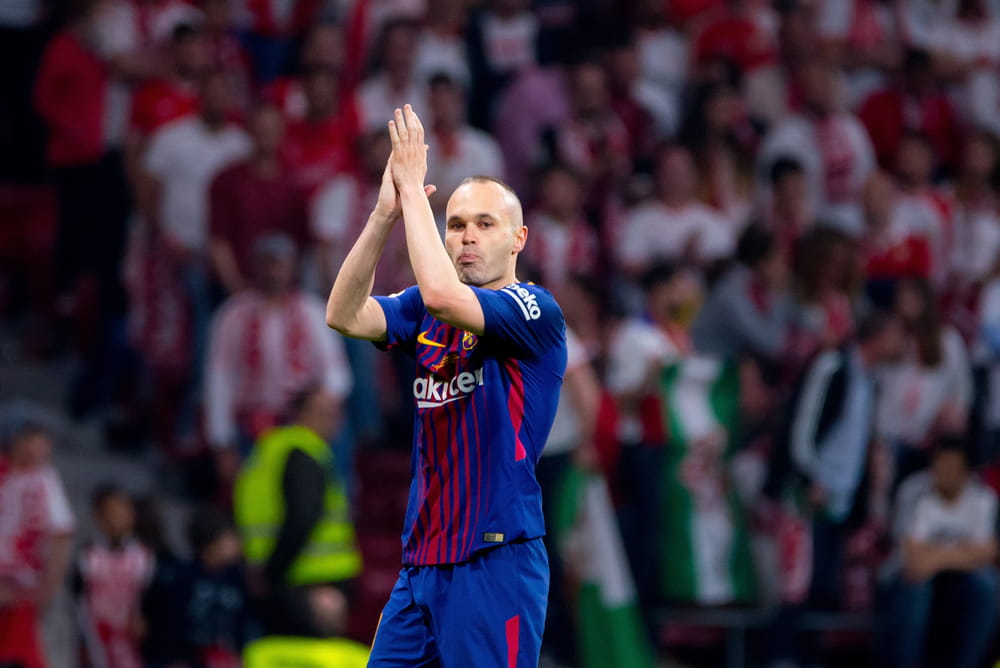
The Iniesta family produces wine in D.O. Manchuela, with vineyards in the province of Albacete. From Torrevieja, where I live, you can reach them in a couple of hours. Manchuela is often grouped culturally and gastronomically with Mediterranean Spain, which is why I am happy to claim Iniesta as almost one of our own.
For many years, much of the work at the estate was led by Andrés’s father, José Antonio Iniesta. Andrés himself retired from professional football in October 2024, so time will tell which direction proves stronger – a return to football as a coach, or a deeper involvement in the family wine business.
Bodega Andrés Iniesta is not a tiny vanity project. Its wines are sold in major supermarket chains such as Carrefour. The estate began with around ten hectares and, over four decades, expanded its vineyards to about 120 hectares – although I have even seen figures as high as 300 quoted elsewhere. The wines are well made and have a solid reputation among specialists.
Read more: if Mediterranean wine culture interests you, Dmitry Kesadov also writes about the southern style of Spanish wines – including Monastrell, Giró and Alicante Bouschet.
Why Spain takes sport so seriously
Before returning to footballers and vineyards, it is worth looking at the wider role sport plays in Spanish life.
Pick up an ordinary Spanish newspaper and, out of perhaps eighty pages, it can sometimes feel as if half are devoted to sport – and a very large share of those to football. At a certain point this stops looking like simple enthusiasm and starts resembling a national obsession.
People occasionally joke that Spaniards are a “nation of legs”. I would make that description a little kinder – and call Spain a nation of very intelligent legs.
Consider the evidence:
- Spain has produced some of the world’s finest footballers, basketball players and cyclists – all sports in which footwork and movement matter enormously. Even in sports we think of as highly tactical or technical, Spanish athletes stand out for their physical intelligence. Rafael Nadal is an obvious example: his spin, angles and shot selection were exceptional, but anyone who watched him closely knows that the work he did with his feet was just as extraordinary.
- Spain is also a country of dancers. The footwork of flamenco and bolero can be as mesmerising as any stage illusion. Even people with little interest in dance are likely to recognise names such as Antonio Gades or Joaquín Cortés. Every region has its own performers and traditions, while ordinary Spaniards dance whenever a fiesta gives them an excuse. Flamenco is often described primarily as a musical or vocal form. Having spent time in Seville, I would argue that its heartbeat lies just as much in the rhythmic movement of feet and hands – and, above all, in rhythm itself.
- Then there is running. Spaniards love road races and marathons with an enthusiasm that can take an unsuspecting visitor by surprise. If you are planning a peaceful Sunday walk through Barcelona, Valencia or almost any major Spanish city, check the race calendar first. On marathon day, everyone seems to be running – young, old and quite a few dogs as well. Barcelona hosts one of Spain’s largest marathons. But it is not only the obvious sporting capitals. Even San Sebastián – elegant, gastronomic, seaside San Sebastián – runs. The first things my wife and I noticed there were excellent clay tennis courts by the waterfront and groups of cyclists moving along otherwise quiet winter promenades. One cyclist suddenly stopped, left his bike and plunged straight into the cold sea. We assumed we had found one of those heroic winter swimmers. The explanation was rather more practical: a wetsuit. Sport in Spain is simply part of everyday life.
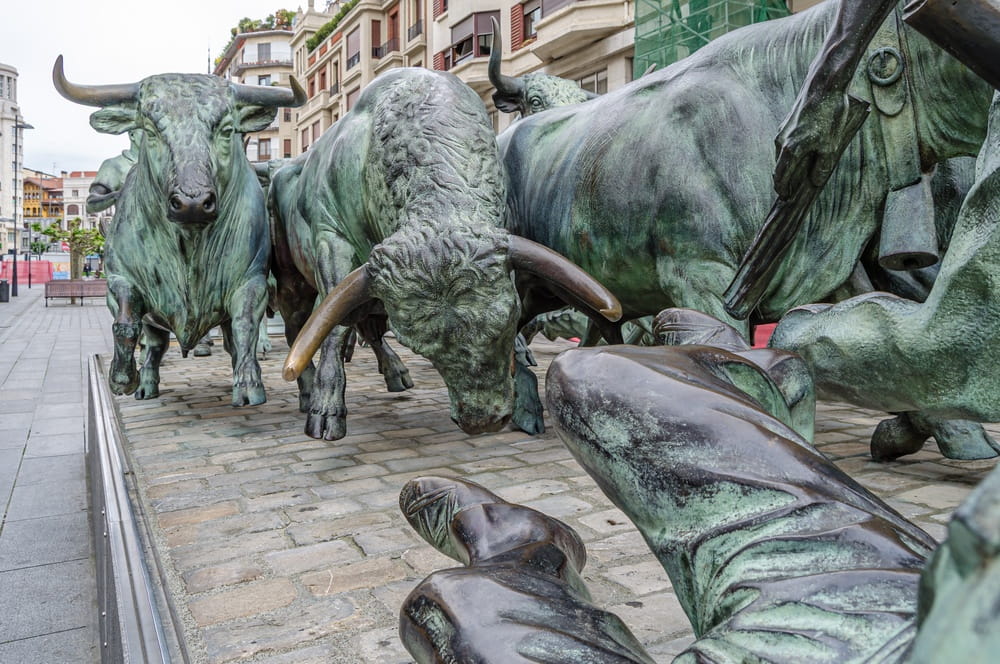
- And finally, bullfighting – or rather what happens before the bullfight itself. Spain has the tradition of the encierro, the running of the bulls, in which people quite literally run ahead of fighting bulls and accept the obvious risk to life and limb. The most famous is held in Pamplona and was immortalised by Ernest Hemingway in The Sun Also Rises. The bulls are released into the streets and driven towards the arena, while runners try to stay ahead of them. The animals are dangerous, of course, but danger is part of the attraction. Participants are allowed to carry little more than a tightly rolled newspaper – not exactly what most people would choose as defensive equipment. The aim of the encierro, however, is not to fight the bull but to guide and excite it on its way to the arena. Experienced runners usually stay alongside the animals only briefly and know which stretches of the route are most dangerous. Even so, falls, collisions and injuries are inevitable, which is why medical teams are stationed along the route. Spain preserves this strange tradition with remarkable determination. And the bullfight itself, whatever one thinks of it, is also built around extraordinarily precise control of the torero’s feet and body.
David Silva and Canary Islands wine
Back to football and wine. Another major name in this story is David Silva.
Like Iniesta, Silva belonged to that legendary Spanish generation of 2008–2012. Born in the Canary Islands, he later invested in the wine project Bodega Tamerán together with Canarian winemaker Jonatan García Lima.
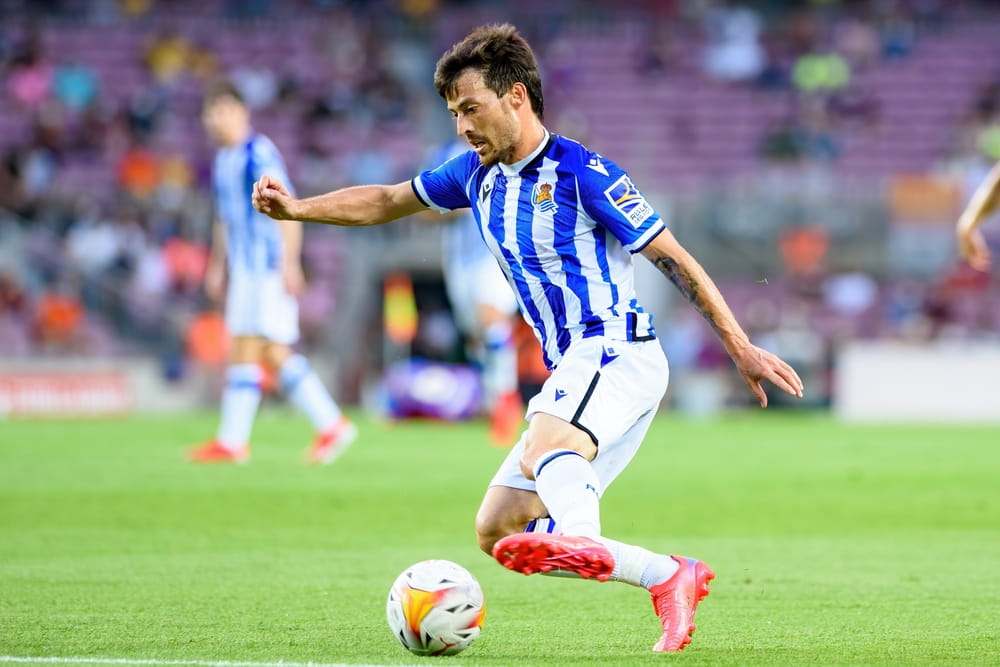
In some ways, Silva is an even more interesting example than Iniesta. First, because after leaving professional football he genuinely settled among his vineyards and is involved in the work himself. Second, because Jonatan García Lima and his own winery, Suertes del Marqués, have become some of the most talked-about names in modern Canarian wine.
And the attention is deserved. Wines such as 7 Fuentes, Trenzado and Vidonia are well worth seeking out. Volcanic soils, old vines and the peculiar conditions of Tenerife produce wines that are anything but generic: distinctive, sometimes unconventional and full of character. They are not cheap – viticulture in the Canary Islands is difficult, labour-intensive and expensive – but the best examples explain why enthusiasts are willing to pay.
Here on the Costa Blanca, you can find some of them at Vinessence.
Like discovering Spain through its wine and food?
Continue with our guide to Monastrell in Alicante and Murcia – one of the defining grape varieties of Mediterranean Spain.
What do footballers actually drink?
There is, of course, another question people always ask: what do the footballers themselves drink?
Wine consumption in Spain has been declining, as it has in many other countries, but wine remains a familiar part of the table for many Spaniards – less a “special occasion” drink than a traditional companion to food.
People accustomed to thinking of elite athletes as living under a rigid, absolute alcohol ban should bear in mind that attitudes in Spain can be rather less theatrical. A glass of wine with a meal has traditionally been viewed differently from drinking for the sake of drinking. And, as I sometimes joke, 150 or 250 millilitres of wine does not look quite so dramatic next to a two-metre professional athlete built mostly, one imagines, out of muscle.
For a while, Spanish social media enjoyed discussing Lionel Messi’s apparent fondness for Único from Vega Sicilia. It is an expensive wine, certainly, but Spaniards discussing the photographs were less interested in the price than you might expect – Messi has long been treated almost as one of their own. Nor was anyone suggesting he drank Único every day. The photographs in question showed special bottles associated with family occasions, including two vintages corresponding to the birth years of Messi and his mother.
Messi has also been connected with wine projects of his own, though he does not make a great public performance of that side of his life.
Professional athletes, for obvious reasons, rarely build their public image around wine and restaurants. If this intersection interests you, I recommend following journalist Santi Rivas, who understands both football and wine unusually well.
Among other things, his work reveals just how seriously some Atlético Madrid players – Marcos Llorente among them – take fine food and wine. Why else would much of the squad end up at the Michelin-starred Basque grill Etxebarri, a restaurant with extraordinary food, an enormous wine list, prices that discourage casual experimentation and a waiting list that can stretch for months?
Santi Rivas offers plenty of anecdotes, gossip and football stories, but also some genuinely thoughtful observations about wine.
Dmitry Kesadov explores Spain’s bar and aperitif culture in more detail in our guide to cocktail bars, vermouth, cava and wine bars in Spain.
Sport as part of everyday life in Spain
Even knowing how much Spaniards care about sport, some of the figures still surprised me. In Andalusia, for example, 65 percent of the population is said to practise sport regularly and actively.
This is not about doing a few stretches in the morning. We are talking about swimming pools, gyms, running, organised sport and football teams that seem to appear in every imaginable workplace – whether it is a large factory or a tiny mobile-phone shop. Andalusia’s 65 percent is among the highest figures in Spain, but nationally the idea remains much the same: sport is woven into everyday life for a remarkable number of people.
Take our part of the Costa Blanca. Torrevieja has excellent modern sports facilities. It is a relatively large city by local standards, but you also find impressive centres in Almoradí and other much smaller towns.
For more on the city, its infrastructure and opportunities for an active lifestyle, see our 2026 guide to Torrevieja.
Then there are the free, or almost free, sports-centre memberships made available through various programmes to unemployed people and groups considered socially vulnerable. The idea is a sensible one: people going through difficult periods may have an especially strong need for physical activity, routine and social contact.
Children’s sport is well developed, but so is recreational sport for people over sixty. This is not sport reserved for aspiring professionals; it is designed for everyone. In Madrid, for example, the Manzanares recreation zone incorporates hundreds of hectares of parkland along the river, with running routes, sports areas and kilometres of cycle paths. Bilbao has developed a comparable recreational corridor along the Nervión.
Considering life on the Costa Blanca?
Before choosing a town or neighbourhood, it is worth looking beyond beaches and property prices. Our Torrevieja city guide covers local infrastructure, sport and everyday life.
From Olympic medals to Carolina Marín
Does all this investment in sport produce results? Absolutely.
Take the Olympic Games. In 1980, just a few years after the end of the Franco era, Spain won one gold, three silver and two bronze medals – six in total. In 2016, the tally was seven gold, four silver and six bronze: seventeen medals. At Paris 2024, Spain won five gold, four silver and nine bronze medals – eighteen altogether.
But the story is not only about medal tables. Spanish athletes have excelled in football, handball, cycling, motorsport, tennis and many other disciplines.
Then there is Carolina Marín.
In 2014 she became both European and world badminton champion. In 2015 she won a second consecutive world title, and in 2016 she became the first European woman to win Olympic badminton gold.
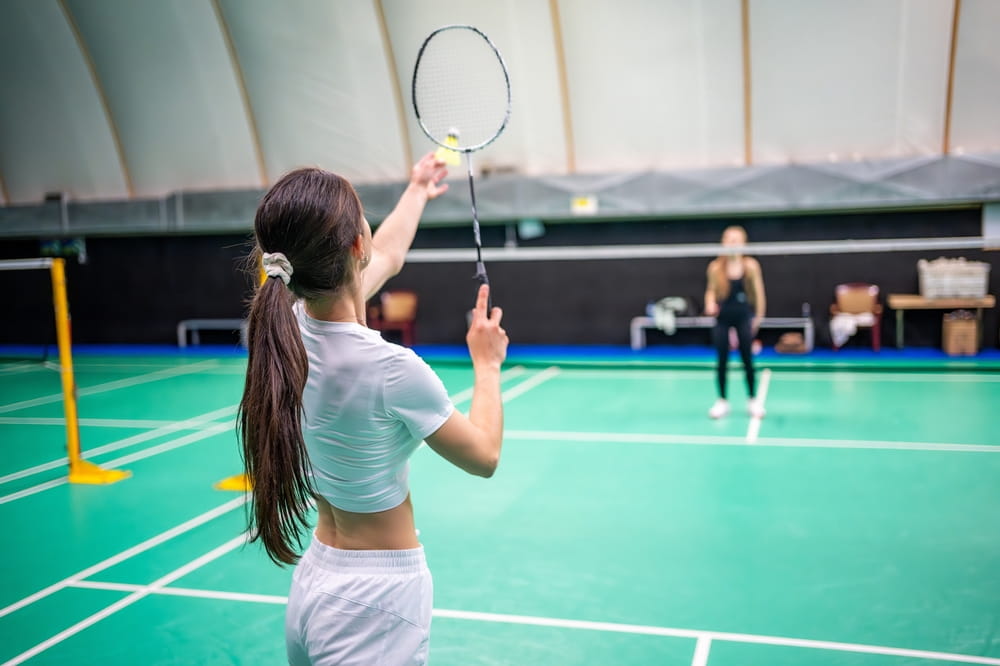
Some readers may not immediately understand why I find this so extraordinary, so a little context helps.
For years, elite badminton was dominated overwhelmingly by Asian players. China, India, Korea, Thailand and other countries repeatedly produced the strongest competitors. The balance of power was so pronounced that athletes from elsewhere often seemed to be competing in a different sporting universe.
The word “badminton” may be English, but the British did not invent racket-and-shuttle games from nothing. They encountered related games in Asia – including the Indian game of poona – and similar traditions existed in China. For generations, Asian countries remained far ahead of most of the rest of the world.
That is what makes Marín’s victories over the very best players from Asia so remarkable.
Her success also inspired a new generation of Spanish children to take up badminton. On her social-media pages you can also find campaigns against bullying, abuse and other forms of violence in sport.
I mention Carolina at such length because 2026 became the final year of her career, largely as a consequence of the serious knee injury suffered at the 2024 Olympics. Even so, she left the sport as an Olympic champion, a three-time world champion and a seven-time European champion. An extraordinary career.
Spain’s very royal relationship with football
So Spain certainly does not live by football alone. Still, let us return to the country’s favourite game.
Even the national federation is not simply a football federation: it is the Real Federación Española de Fútbol – the Royal Spanish Football Federation.
The monarchy and football have long been intertwined symbolically. After major victories, Spain’s monarch may be presented with a number-one national-team shirt, and royal patronage has historically carried genuine cultural weight in Spanish sport.
There are even people who jokingly draw a connection between Spain’s disastrous 2014 World Cup campaign and the change of monarch taking place at almost exactly the same time. According to this highly unscientific theory, the country had become so accustomed to the long reign of Juan Carlos I that his abdication somehow unsettled the national mood – footballers included.
Real Madrid offers a more concrete example of the royal connection. The club received the title Real – “Royal” – from King Alfonso XIII and went on to become one of the most famous football institutions in the world.
In Spain, then, the relationship between football, public institutions and the monarchy has never felt entirely ceremonial. They are part of the same national theatre, and often enthusiastic participants in it.
It is hardly surprising that after the recent 2026 World Cup victory, the legendary winery Aalto and its owner and oenologist Mariano García – a committed football supporter himself – prepared a special five-litre Aalto Jeroboam for coach Luis de la Fuente and Royal Spanish Football Federation representative Aitor Karanka in recognition of their contribution to the team’s success.
The wines Mariano García produces in Castilla y León – Mauro, San Román, Garmón and others – together with Baynos from Rioja Alavesa, made with his son, are themselves legends of modern Spanish wine.
I remember the Mauro and San Román vintages of the 1990s very well. At the time, these were among the great wines on the lists of the best restaurants in our part of Spain. They cost considerably more today, of course, but they remain deeply convincing wines.
The national team’s wine – and jamón for the winners
We are almost at the end, but there is one more detail worth mentioning. Spanish footballers do not only have an “official” water – currently Agua Sierra Cazorla, which makes perfect sense for professional athletes – but also a wine closely associated with the national team: Ramón Bilbao.
The Zamora Company, whose portfolio includes Ramón Bilbao and the excellent Albariño Mar de Frades – and which has also added the Galician winery Godeval, another producer I happily recommend – demonstrated just how effective the combination of good commercial instincts, good timing and Spanish football can be.
Having become a sponsor only a few years earlier, the brand suddenly found itself enjoying international attention alongside the Spanish team.
There are plenty of other examples we have not had time to explore. Neymar, for instance, has taken part in an international wine-collection project in which Spain was represented by the well-known Faustino winery. Cristiano Ronaldo has invested in restaurant businesses, including ventures involving Rafael Nadal and the Iglesias family. Sergio Ramos has been linked as an investor to the Kabuki restaurant group. The overlap between professional sport, hospitality, wine and gastronomy is much larger than it first appears.
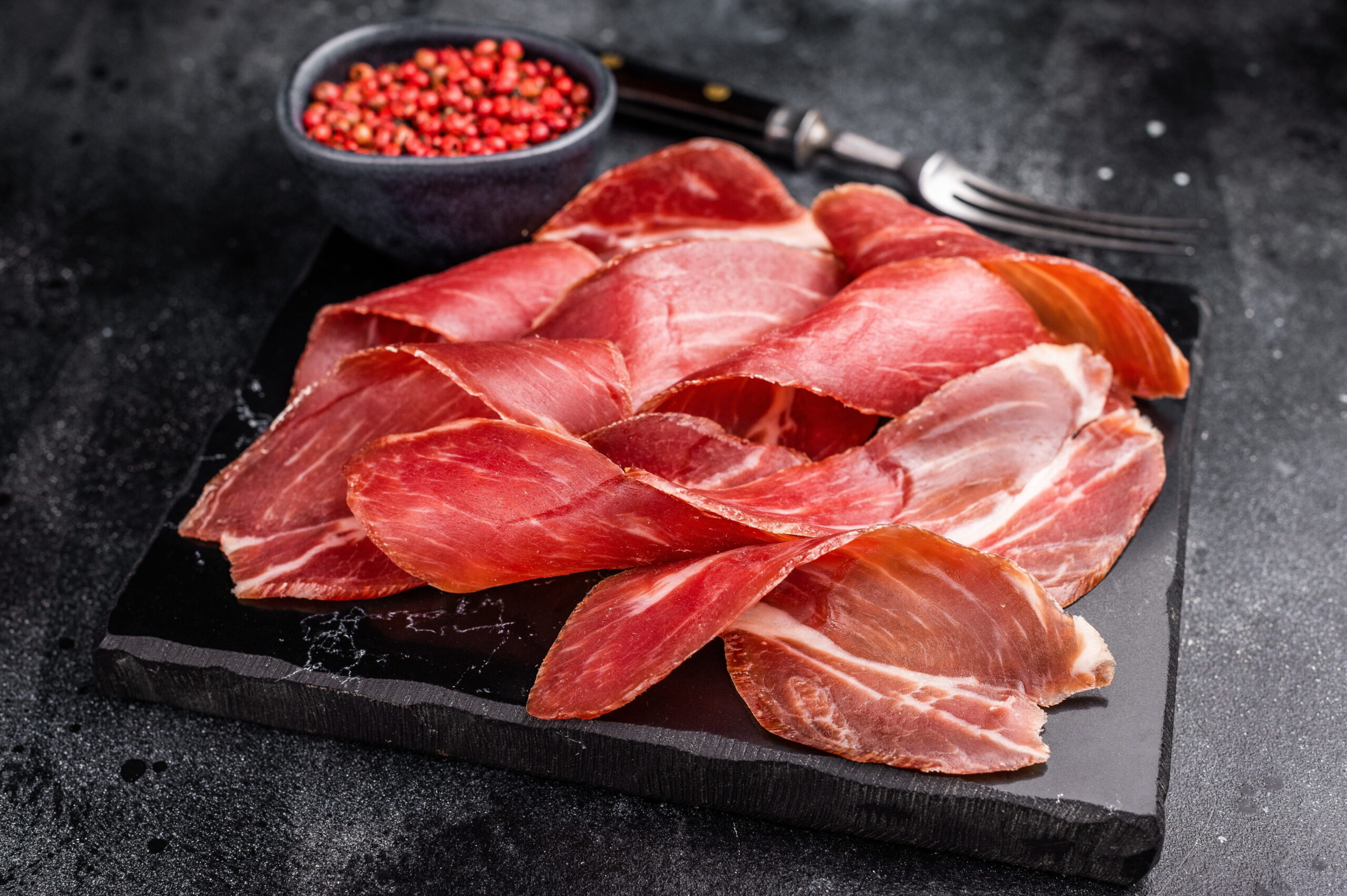
And naturally, we must finish with jamón. How else could a story about Spanish football and food end?
The well-known jamón specialist Enrique Tomás promised to reward players named best on the pitch by giving them their own body weight in jamón.
It has the pleasing extravagance of an old legend in which a victorious hero receives his weight in gold, or as many jewels as he can carry away.
In this case, the symbolism feels entirely appropriate. For Spaniards by birth, Spaniards by choice and football supporters who have simply adopted the country as their own, the 2026 championship victory feels like the sort of story people will tell for years.
And if football has left you hungry for more of Spain’s culinary culture, continue with our guide to Spain’s national dishes and regional gastronomy.
There is more to discovering Spain than ticking off landmarks.
Wine, local food, markets and neighbourhood restaurants often reveal more about a region than any conventional guidebook. Continue exploring in our Spanish cuisine section.
That is all for today. Until the next wine and gastronomic story.
Useful links
- Bodega Andrés Iniesta, S.L.U. – view on the map
- Bodega Tamerán – official website
- Bodegas Suertes del Marqués – view on the map
- Santi Rivas on YouTube
- Royal Spanish Football Federation – www.rfef.es
- Enrique Tomás – www.enriquetomas.com
- Bodegas Ramón Bilbao – www.bodegasramonbilbao.com
FAQ
Which famous Spanish footballers are involved in winemaking?
Dmitry Kesadov focuses on two particularly interesting examples: Andrés Iniesta, whose family owns Bodega Andrés Iniesta in D.O. Manchuela, and David Silva, who is involved in the Canary Islands wine project Bodega Tamerán.
What is the connection between Andrés Iniesta and Corazón Loco wine?
Corazón Loco is produced by the Iniesta family’s winery. The article opens with a bottle of Corazón Loco Sauvignon Blanc signed by Andrés Iniesta and also mentions Minuto 116, a wine whose name refers to the 116th-minute goal with which Iniesta decided the 2010 World Cup final.
Why is sport such an important part of Spanish culture?
The article presents sport as something woven into everyday life in Spain – from football, tennis, cycling and road races to dancing, municipal sports facilities and organised activities for children and older adults.
Do Spanish footballers drink wine?
The article looks at footballers’ links with wine and fine dining rather than suggesting a single rule for professional athletes. Kesadov also notes that in Spanish culture wine has traditionally been understood primarily as an accompaniment to food and part of the wider gastronomic experience.
Which Spanish wines and wineries are mentioned in the article?
Among them are Bodega Andrés Iniesta, Tamerán, Suertes del Marqués, Vega Sicilia, Aalto, Mauro, San Román, Garmón, Baynos, Ramón Bilbao, Mar de Frades and Godeval. The author also recommends Canary Islands wines including 7 Fuentes, Trenzado and Vidonia.
Author: Dmitry Kesadov. This article is provided for general information. References to wines, restaurants, producers and other brands form part of the author’s editorial material and do not constitute a public offer.