- What it is about: Nyora i Llagostí, a gastronomy week in Guardamar del Segura.
- When: 1–7 June 2026.
- Main local ingredients: Guardamar prawns and the sweet dried ñora pepper.
- Who will enjoy it: anyone who likes Spanish food culture, seafood, local restaurants and a Costa Blanca atmosphere without unnecessary noise.
- Practical tip: festival lunches may be booked quickly, so it is worth checking availability directly with the restaurant.
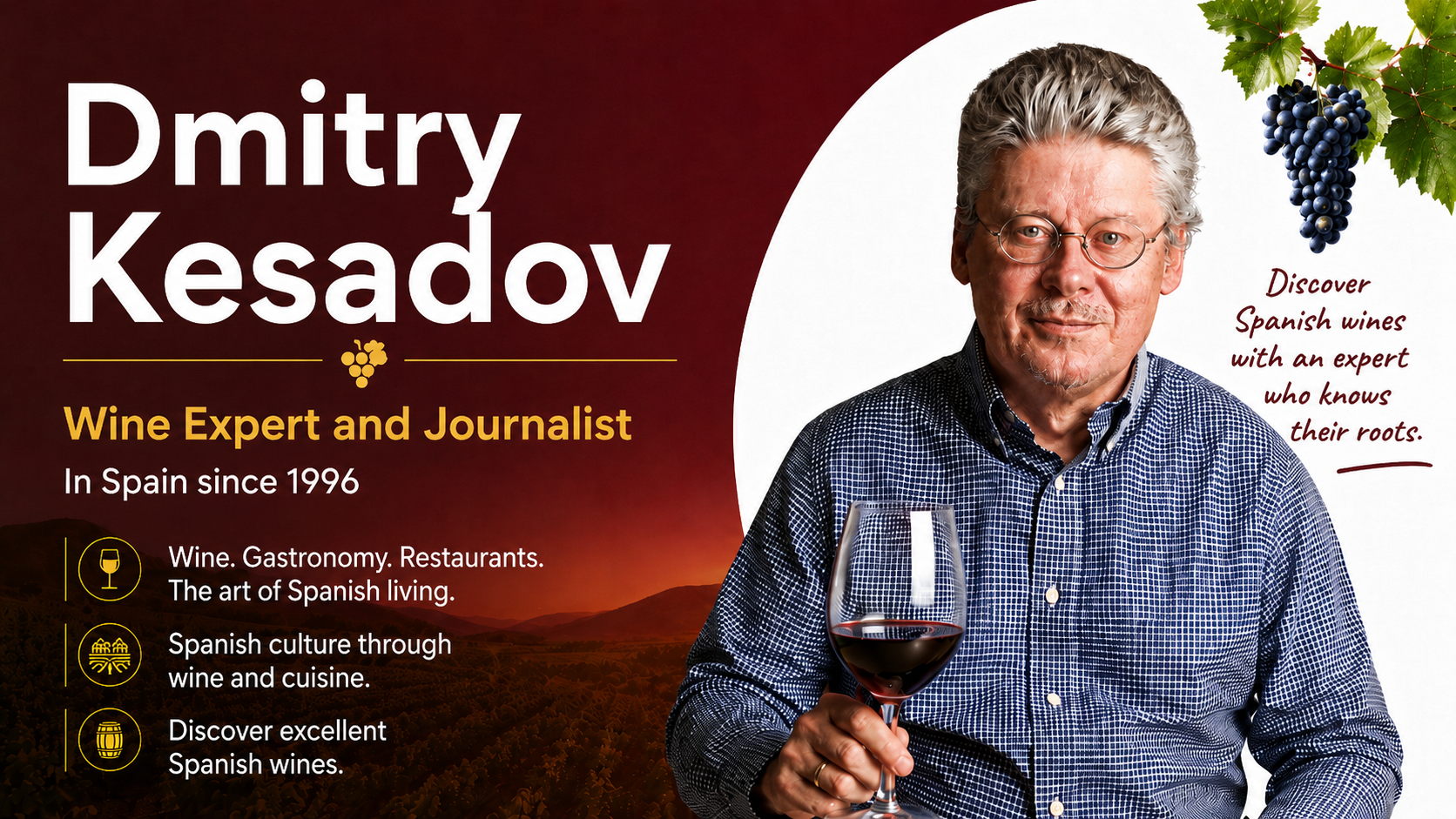
- Author: Dmitry Kesadov – wine expert and journalist, graduate of the Enotria wine school, living in Spain since 1996; his main focus is food, wine and restaurants as part of Spanish culture.
Nyora i Llagostí in Guardamar: prawns, ñora pepper and Costa Blanca flavor
Spain and word of mouth: how the best addresses travel
Hello, this is Dmitry Kesadov, wine expert and journalist, with our food-and-wine notes from Spain.
Spain is a curious country when it comes to recommendations. People are warm, open and sociable, but also surprisingly careful with direct promotion. Loud marketing often feels almost alien to the Spanish way of life. If something is truly good, many Spaniards believe it does not need to shout. A father will whisper it to his son, a colleague will mention it at work, a friend will pass on the address. In other words, the most reliable Spanish media channel is still word of mouth.
Once, a Spanish friend of ours, the owner of a local jardinería, started explaining which jamón we should buy. He is a kind man, slightly absent-minded; my wife and I privately call him “the garden head”. So there he was, solemnly preparing to reveal the name of the only right jamón.
And then, in front of our eyes, he turned red from the effort of trying to remember at least one brand. It looked as if the mental pressure might finish him off. I quickly patted him on the shoulder and reassured him that life without a remembered jamón brand was still possible.
He exhaled with relief and immediately continued: “And with jamón you need a good bottle of red Spanish wine. I’ll tell you which one!” The same scene repeated itself almost frame by frame: our “garden head” swelled with the effort of memory, and for a moment it seemed we might lose a perfectly good person to the cause of wine branding.
The point is not that he is foolish, lazy or uninterested. It is a different relationship with knowledge. Since childhood, the butcher in the neighborhood had sold him the right jamón. A restaurant-owner friend had always recommended wine. For many Spaniards, these are real authorities – not guides, rankings or brand names that one is expected to recite on demand.
Why staying in the loop in Spain takes effort
This story partly explains why direct advertising in Spain can feel so peculiar. Events are often announced in a beautiful, festive tone immediately after they have taken place. Something like: “Last month our town of Almoradí welcomed artichoke lovers to its annual local celebration…” Try visiting an event promoted with that kind of timing.
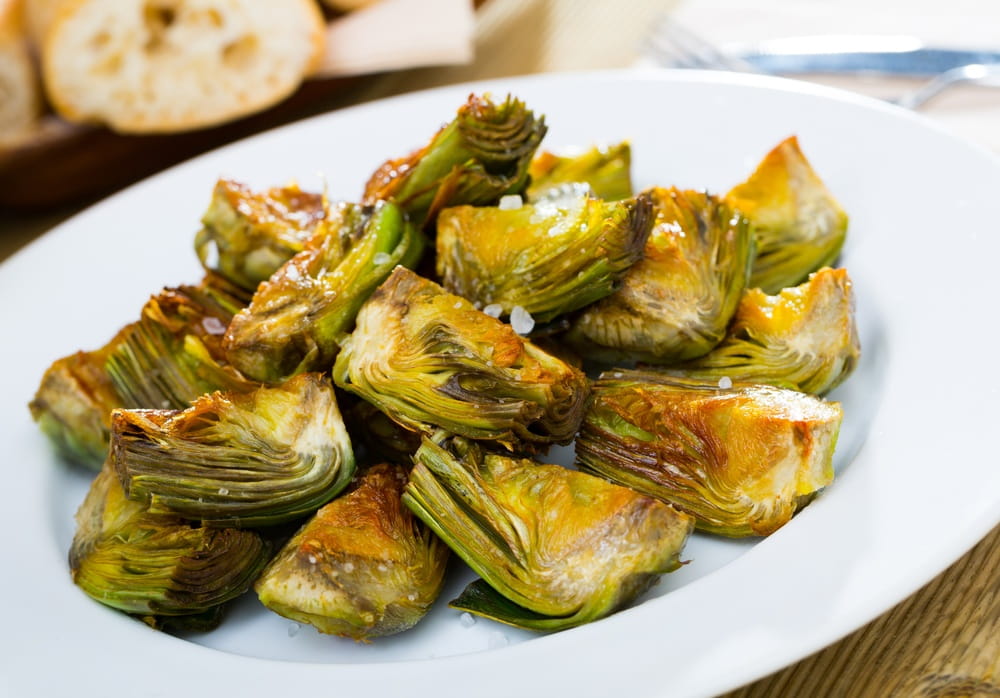
This year, I saw a notice for an artichoke gastronomy week published a full week before it began. I was impressed. Then I read the small print: booking lunch in the participating restaurants was already impossible because all seats had been reserved in advance by locals. That information appeared in the same announcement that was supposed to invite everyone else.
Another masterpiece of Spanish marketing once found us in a local bodega. We asked the owner to recommend a good restaurant nearby. With visible pride, he handed us a beautiful brochure, full of atmospheric photographs of the restaurant and its interiors.
We were just about to leave when we noticed one small detail: the brochure contained no address, no map, no phone number and no contact information at all. The restaurant owner, deep in the province and surrounded by people who already knew the place, had apparently never imagined that someone might not know how to get there. We had to return to the bodega for explanations.
Of course, this is a joke – but only partly. In Spain, being “in the know” sometimes requires effort.
Nyora i Llagostí in Guardamar: what happens from 1 to 7 June
So let us try to break the circle and make an announcement before it is too late. From 1 to 7 June 2026, Guardamar del Segura will host the gastronomy week Nyora i Llagostí – in Spanish, la ñora y el langostino.
This is already the 22nd edition of the event, traditionally held at the beginning of June.
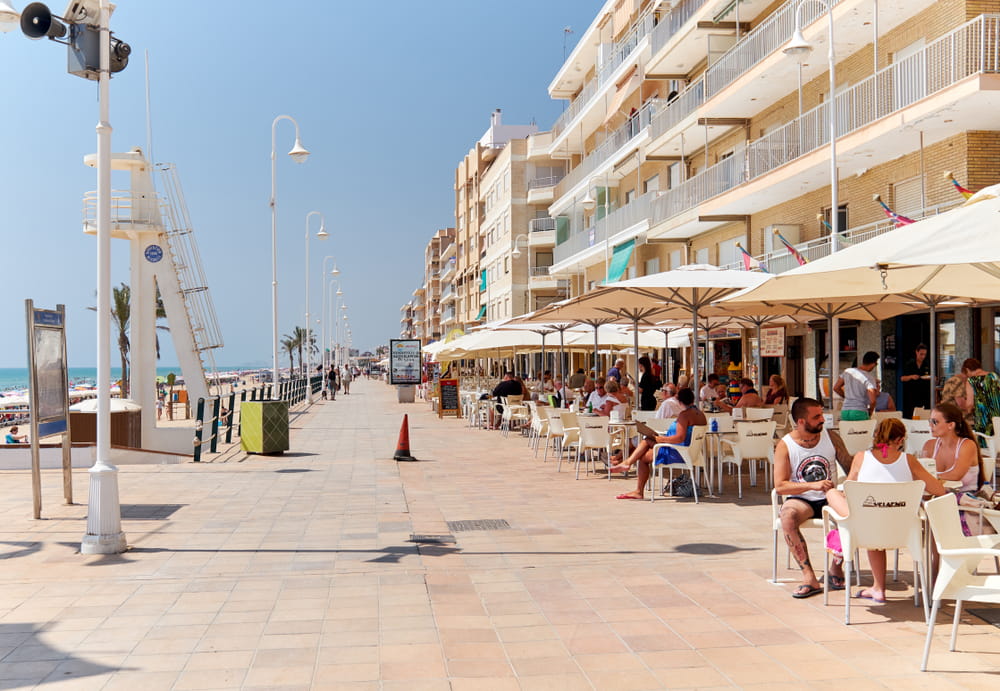
The timing is not accidental. First, early June opens the tourist season. Second, spring and summer are a particularly good period for the famous Guardamar prawns. The Mediterranean is generous with prawns, shrimps and other sea creatures, but these are born where the Segura River meets the Mediterranean. That meeting point gives them their character: a little fresher, a little sweeter, a little more delicate in flavor.
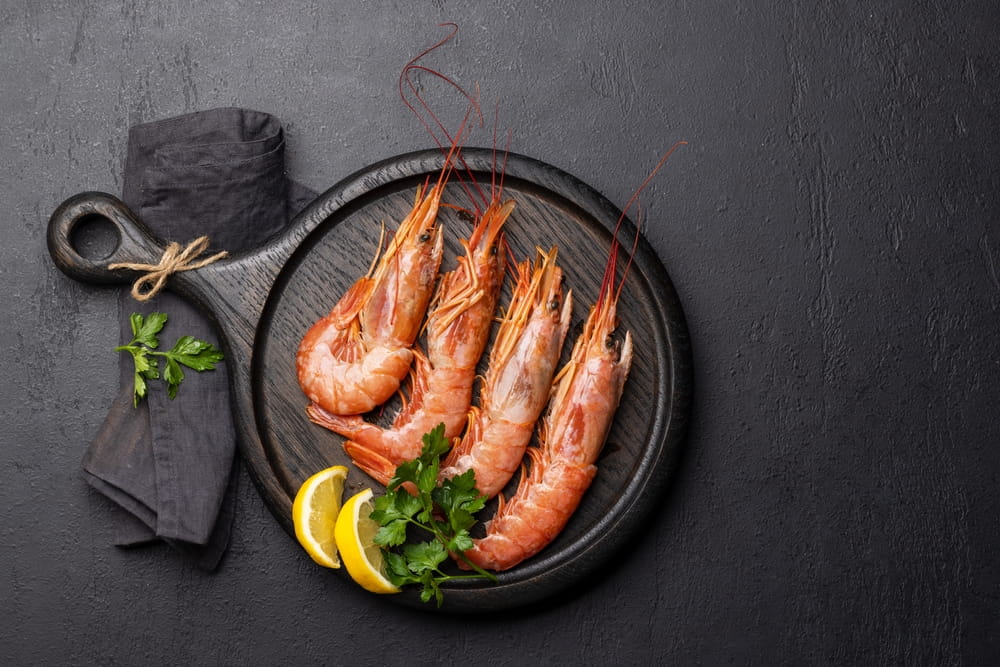
Two local stars: Guardamar prawn and ñora pepper
The second hero of the festival is the ñora pepper, which reached Spain as part of the famous Columbian exchange between the two sides of the Atlantic. Indigenous peoples of the Americas gave Europe peppers, tomatoes, corn and potatoes. Europeans, not to be outdone, shared alcohol and venereal diseases.
That is a joke, of course. Although potatoes and vegetables were not the only things to cross the ocean: later came the Colorado potato beetle, and then phylloxera, which destroyed almost all European vineyards. In short, the exchange had mixed results. But Guardamar was lucky with the ñora: a significant part of this beautiful, spicy-sweet pepper is grown here.
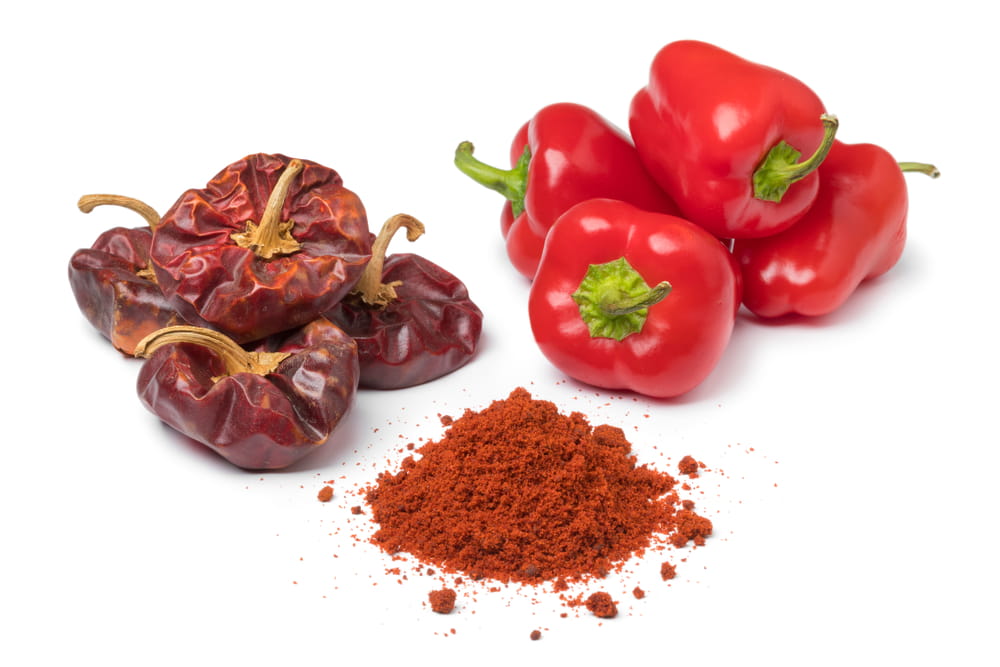
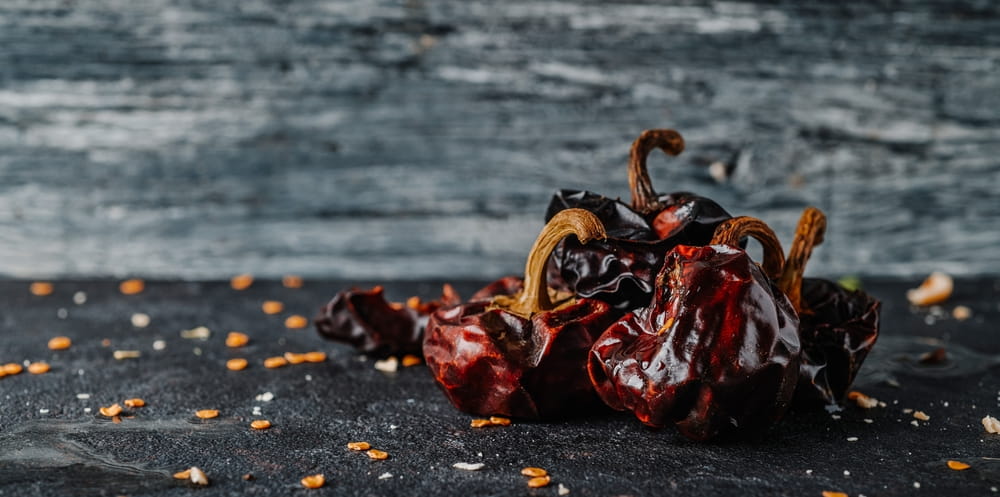
The peppers are dried right on the beaches. You can buy them whole and dried, or as a ready-made paste – for example, with garlic. In Catalonia, a mixture of salt, pepper, ñora, garlic, olive oil and white bread became almost a cult under the name picades.
In our area the approach is more practical and rural. Ñora is used more often dry: in paella, rice dishes, sauces and local stews. You can find it at markets, sometimes in a smoked version – ñora ahumada – or in supermarkets such as Mercadona.
The pepper is almost round, which is why it is sometimes called pimiento de bola. Its color is deep, dark and beautiful, close to an inky purple.
But instead of reading endlessly about how to cook Guardamar prawns and ñora peppers, it is probably wiser to choose a restaurant and go for one of the festival lunches.
Where to try the festival menu
The festival lunches will be served in five restaurants in Guardamar: Club Náutico, El Jardín, Edén Mar, Jaime Legend and Origen.
My wife and I have our own favorite: El Jardín, led by chef Jorge Amores. I will not describe it in haste here; that restaurant deserves a separate, calmer story. I will only say that the team is moving confidently toward wider recognition and perhaps, one day, a Michelin star.
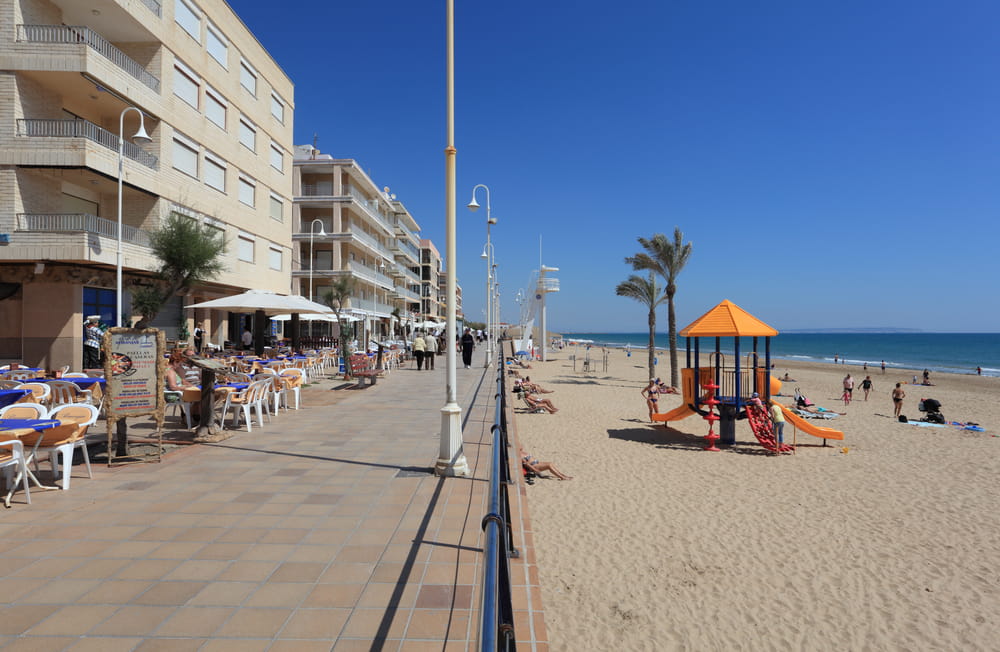
Another participant is Jaime Legend. This is a different story. Many people remember the seaside restaurant called Jaime, located among the former fishermen’s huts and named after the head of the family, Jaime Cañavate. The legal status of those buildings had long been complicated: they operated under a concession, but the concession expired. In 2025, the buildings on Playa Babilonia were partly demolished, including the old Jaime restaurant, which, according to the owners, had been open for 59 years.
We arrived in Guardamar in 1996, and even then it seemed as if Jaime had always been there: first as a true chiringuito, later in a slightly modernized form. The authorities may have managed, if not to destroy Rome, then at least to dismantle Babylon – Playa Babilonia – but the restaurant will remain in local memory for a long time. Prices were modest, and the fish and seafood were fresh.
The family also had a “town” restaurant closer to the park, El Bleu. We had eaten countless times by the sea, but only once at El Bleu. The kitchen was fusion, decent, yet something felt unfinished. Now the family has made what seems to me the right decision: rebrand, call the place Jaime Legend and, after 69 years of work, begin again with a clean page. The ñora and langostino festival is a good reason to discover the “new” Jaime.
May Spain give us as many good restaurants as possible.
Guardamar and the Costa Blanca with Alegria
Guardamar is not only a place for food routes. It is also one of the Costa Blanca towns where the sea, walks, restaurants and a calm rhythm of life come together naturally. If after a trip you start imagining life by the Mediterranean, explore the Alegria property catalogue or request property selection in Spain.
For a short coastal stay, the rental services in Spain section may be useful. And if you want to keep exploring Spanish food-and-wine culture, read Dmitry’s previous notes on where to drink and snack in Spain and Monastrell wines in Alicante and Murcia.
Useful links
- Club Náutico Guardamar – open on map
- Restaurante El Jardín – open on map
- Edén Mar – open on map
- Restaurante Jaime Legend – open on map
- Origen Restaurante Guardamar – open on map
- The Past and Future of Monastrell: wines to try in Alicante and Murcia
- Food and drink venues in Spain: where to drink and snack
FAQ
What is Nyora i Llagostí?
It is a gastronomy week in Guardamar del Segura dedicated to two local ingredients: ñora pepper and Guardamar prawns.
When does the gastronomy week take place?
This article refers to the 2026 edition, held from 1 to 7 June.
Why are Guardamar prawns considered special?
The author connects their character with their place of origin: the area where the Segura River meets the Mediterranean Sea, which gives them a delicate, fresh and slightly sweet flavor.
What is a ñora pepper?
Ñora is a sweet, aromatic, rounded pepper that is usually dried and used in rice dishes, sauces and local preparations.
Which restaurants take part in the festival?
The article mentions five restaurants: Club Náutico, El Jardín, Edén Mar, Jaime Legend and Origen.
This material is not legal or tax advice. It is not a public offer.