TL;DR: Dmitry Kesadov explores the many types of bars and restaurants where visitors can experience authentic Spanish cooking. He explains how a traditional tasca differs from an ordinary tapas bar, why a seaside chiringuito is worth seeking out, and what culinary discoveries await more adventurous diners in a casquería.
About the author: Dmitry Kesadov is a wine expert and journalist, a graduate of the Enotria wine school, and has lived in Spain since 1996. His main interests are food, wine and restaurants as expressions of Spanish culture.
Where to Find Authentic Spanish Food
Hello again – Dmitry Kesadov here, your wine guide.
On these gastronomic pages, we often argue that there is little point in envying the elegance of Parisian cuisine, despairing over the price of Burgundy or patiently saving for a pilgrimage through Michelin-starred destinations such as San Sebastián. Sometimes, it is far more rewarding simply to look around.
Step slightly away from the main tourist routes and leave the crowds behind, and you may discover an extraordinary concentration of exceptional produce, wines and delicacies – some of them, without exaggeration, among the finest in the world.
The Culinary Treasures of Alicante and Murcia
Did you know, for example, that leading chefs from across Spain and beyond have travelled to Alicante province to taste what many consider the country’s finest rice dishes in the restaurants around Pinoso? These dishes have very little in common with the tourist version of paella served in many resort areas.
And did you know that connoisseurs are prepared to pay €200 or more per kilogram for the famous red prawns of Dénia?
Then there is the story of Orson Welles, the celebrated director whose film Citizen Kane is still widely regarded as one of the greatest ever made.
One day, at the Rincón de Pepe restaurant in nearby Murcia, Welles ordered a shoulder of young goat – paletilla de cabrito – and a bottle of red wine. After finishing both, he immediately ordered the same meal again.
He then asked to see the cook and declared that it had been the best lunch of his life. His only regret, he said, was that he was no longer capable of eating and drinking it all for a third time.
You can learn more about the neighbouring region in our guide to Murcia, its traditions and regional cuisine.
Stories like these are not widely known. More precisely, they rarely travel beyond the provinces and autonomous communities of Murcia and Alicante.
Spaniards are so convinced of the quality of their food and produce that they often make little effort to promote it beyond their town or province, let alone to the wider world.
The result is that you can find hamburgers and pizza in almost any country – and very good versions of both, in many cases – while truly regional Spanish food often requires a journey to places well beyond the obvious tourist trail.
Where Spaniards Go to Eat
So where should you look for these outstanding ingredients and dishes?
The answer is in Spain’s bars and restaurants. One thing Spaniards are generally reluctant to do is eat while rushing from one place to another.
In an earlier article, we explored the different types of places where people drink and enjoy a quick bite in Spain. This time, we turn to the main venues for anything from a light snack to a full meal.
Spanish Venues for a Quick Bite
The most recognisable formats include the tasca, chiringuito, tapas bar, marisquería and casquería.
A nation that loves food inevitably develops an impressive vocabulary for eating. In English, we might grab a bite, have a snack, pick at something or stop for a quick nibble.
Spanish has its own rich selection of expressions. People may order una ronda de tapas – a round of tapas – or go out to picar, literally to peck at small amounts of food. They might order an aperitivo, a botana or tapas at the bar, or choose a dish para compartir, intended for two people or the whole table to share.
In theory, these expressions all imply something light. In practice, one plate often leads to another.
La Tasca – the Traditional Spanish Bar
As you walk past the standard cervecerías and cafeterías – often perfectly serviceable, if somewhat predictable – you may suddenly notice a small bar with the words La Tasca above the door.
Do not overthink it. Go inside.
You are likely to find a welcoming, atmospheric place with a traditional interior and a short but carefully chosen menu. The food will probably be comida casera – home-style cooking – rather than something reheated from frozen.
The word tasca is sometimes associated with the idea of a crowded, tightly packed place. That captures the mood rather well: little room, plenty of people and no reason to complain.
Today, most people use tasca almost as a synonym for a traditional tapas bar where you can eat and drink. Historically, however, these places may have had more in common with provincial British pubs. People did not simply drink there. They read newspapers, listened to music, grew up, met friends, fell in love and, in short, spent a significant part of their lives there.
Plenty of these establishments still survive in Spain, and even more can be found in Portugal.

Tapas Bars – from Frozen Croquettes to Genuine Delicacies
Tapas bars are familiar to almost everyone, but the name alone tells you very little about the quality of the food.
Some owners rely heavily on the concept while buying frozen pastries, croquettes and potatoes in bulk. In places like these, you will find the same uninspiring patatas bravas and overfried croquettes again and again.
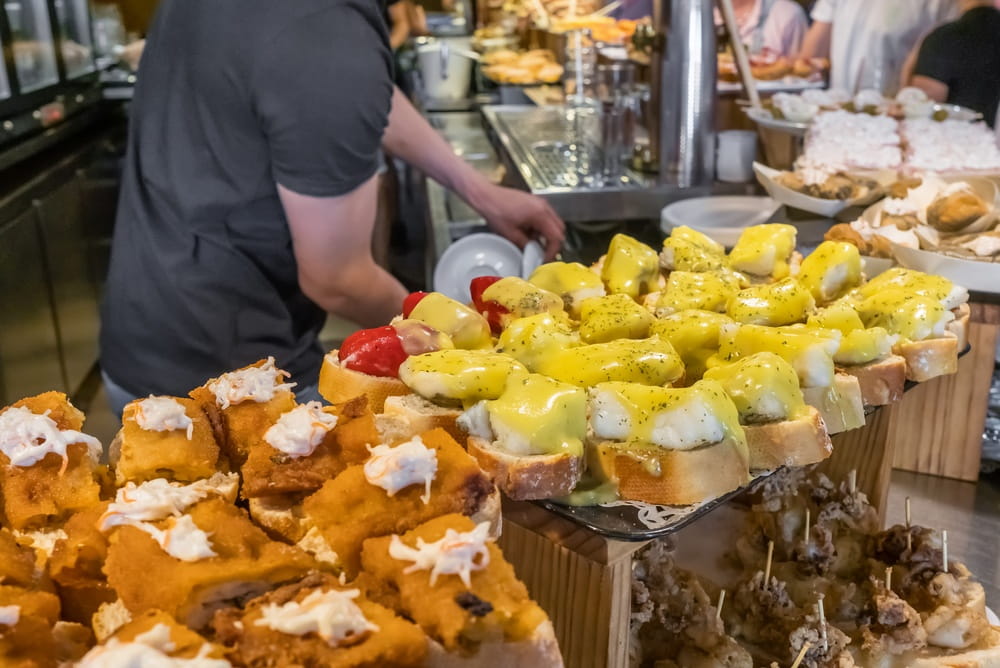
Other tapas bars are genuine treasures. They serve homemade croquettes and buñuelos, finely sliced Iberian ham, delicate salazones – salted and cured fish, roe and other specialities – as well as prawns and shellfish in countless forms.
Tapas culture is particularly strong in the south, most famously in Granada, and in the north, especially San Sebastián. The Alicante area, however, also has excellent examples: the bar counter at Piripi in Alicante, the tapas at La Cañada in Guardamar and several respected Alicante venues, including Taberna del Gourmet, La Barra de César Anca and Racó del Plá.
Chiringuito – Eating by the Sea
Anyone who lives on the Spanish coast – and almost any southerner – will immediately recognise the word chiringuito.
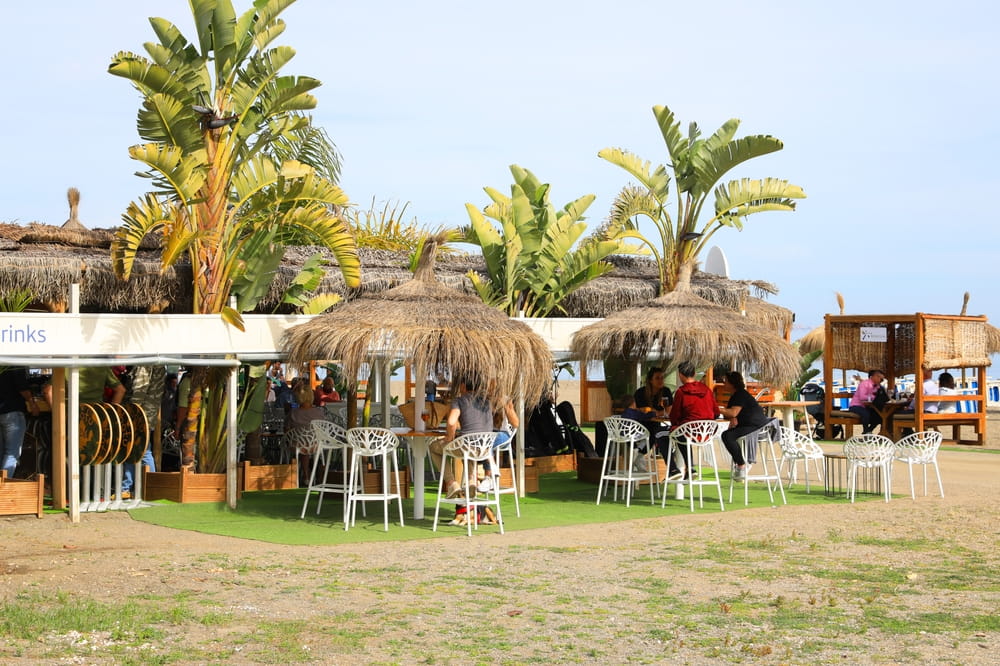
These are seasonal cafés or restaurants located directly on the beach or on the first line by the sea. They serve drinks, snacks and, in many cases, complete meals.
Some are little more than lightweight seasonal structures. Others are fully established restaurants with history, character and a loyal clientele.
Spain even produced a popular television comedy called Chiringuito de Pepe, centred on a family that runs precisely this kind of seaside restaurant.
Pepe, the old-fashioned owner, is a self-proclaimed king of croquettes and fried food. He is devoted to tradition and suspicious of anything new – a familiar character type in this part of Spain.
His son represents the opposite approach: modern techniques, new ideas and the ambitions of haute cuisine. The two repeatedly argue, reconcile and find themselves in comic situations as they search for the right future for the family restaurant.
For Spanish viewers, the series offers plenty of comedy. For outsiders, it also provides an entertaining introduction to Spanish attitudes, family dynamics and restaurant culture.
Casquería – Spain’s Nose-to-Tail Tradition
The next format is the casquería.
A sign bearing this word means that the establishment sells or cooks offal and other less familiar cuts. Alongside conventional meat, you may find inexpensive and flavourful dishes made from kidneys, liver, trotters, ears, heads and other parts of the animal.
Spaniards take pride in using the whole pig – and not only the pig.
Those who enjoy offal and are prepared to venture beyond the familiar plate of liver and potatoes may discover, for example, tender grilled mollejas, or sweetbreads.
Anyone ready for more ambitious experiments involving the organs and lesser-known cuts of cows, bulls, lambs and poultry is a natural customer for a casquería.
This is not necessarily rustic or unsophisticated food. Some menus are highly inventive and technically impressive.
Restaurants that Combine Traditional Formats
Some restaurants deliberately combine several traditions.
In Madrid, chef Javi Estévez brought together the concepts of the tasca and the casquería to create La Tasquería, a restaurant where curious diners can make a remarkable number of culinary discoveries.
The restaurant earned a Michelin star, established something close to a new category of its own and inspired numerous imitators.
My wife and I also occasionally have lunch at La Tasquita de Enfrente in Madrid, led by another charismatic chef, Juanjo López. The smoked eel is excellent, the tuna is handled beautifully and the wine list is exceptionally well considered.
It must be admitted that the presentation, style – and prices – at both restaurants have long since moved beyond their tavern roots. In many respects, they now resemble fine-dining establishments.
Yet something distinctive remains in both the atmosphere and the menus. The chefs frequently return to traditional offal and overlooked cuts such as tongue, brains and tails, reworking familiar recipes in more refined forms.
Michelin and Repsol – Two Different Ways of Judging Restaurants
The contrast between the Michelin Guide and Spain’s own Repsol Guide is revealing.
Michelin recognised only La Tasquería, awarding it a single star in 2019. Repsol rated both restaurants equally highly, giving each two of its coveted Soles Repsol, or Repsol Suns.
Marisquería – Seafood, Cold White Wine and Fair Prices
When it comes to fish and shellfish, Spaniards are particularly fond of the marisquería – usually a lively, noisy restaurant offering relatively approachable prices for ingredients that are rarely cheap, including prawns, squid, oysters and octopus.
The essence of a good marisquería is simple: fresh seafood, ice-cold white wine or beer, and honest pricing.
For many years in Torrevieja, we regularly visited the old Marisquería Número 1 and Marisquería Número 2, both owned by the Rodríguez brothers.
Several years ago, the family renovated and rebranded the businesses, opening Marisquería Mar de Levante and Freiduría Mar de Levante in their place.
The name of the second restaurant comes from the verb freír, meaning to fry. It specialises in the sort of deep-frying in which prawns, baby squid, small fish and other seafood are dropped into hot oil and served crisp and fresh.
We have not yet visited the restaurants since their renovation, but thirty years of experience in the seafood business is not easily lost.
For more about the area, read our guide to life in Torrevieja.
Where to Sit Down for a Proper Meal
Let us be honest: in our part of Spain, tapas remain something of a supporting act, while refined tasquerías are still relatively uncommon.
Traditional restaurants, by contrast, have always been valued for their generosity and hospitality.
That does not mean the food is necessarily heavy. The Mediterranean has made this region famous for outstanding fish and seafood.
Indeed, despite the fact that people here seem permanently preoccupied with eating and drinking – often talking about little else – the Mediterranean coast is associated with longevity and with the celebrated Mediterranean diet.
The broader phenomenon – eating generously, drinking well and somehow remaining healthy – is sometimes described, not entirely seriously, as the Mediterranean paradox.
It is time, then, to move beyond snacks and talk about restaurants designed for a substantial meal.
Alongside general restaurants with large menus, two formats deserve particular attention: the asador and the pulpería.

Land and Sea in Spanish Cooking
Many readers will know Peter Paul Rubens’s painting The Union of Earth and Water.
Its powerful composition reflects a familiar human tendency to interpret the world through opposing forces: good and evil, insiders and outsiders, men and women.
Some art historians suggest that Cybele, the goddess of Earth, represents Flanders, while Neptune, god of the sea, represents Spain – Flanders’ ally in its struggle to regain access to the sea after it had been blocked by the Dutch.
Centuries later, the historical symbolism may escape most viewers. To a Spaniard, however, the gastronomic meaning is immediately clear: the union of fish and meat is an excellent way to keep both the customer and the restaurant happy.
Achieving perfect harmony between the two is not always easy, which is precisely why so many Spanish restaurants specialise in one or the other.
Asador – Meat Cooked over an Open Fire
The meat specialists are known as asadores.
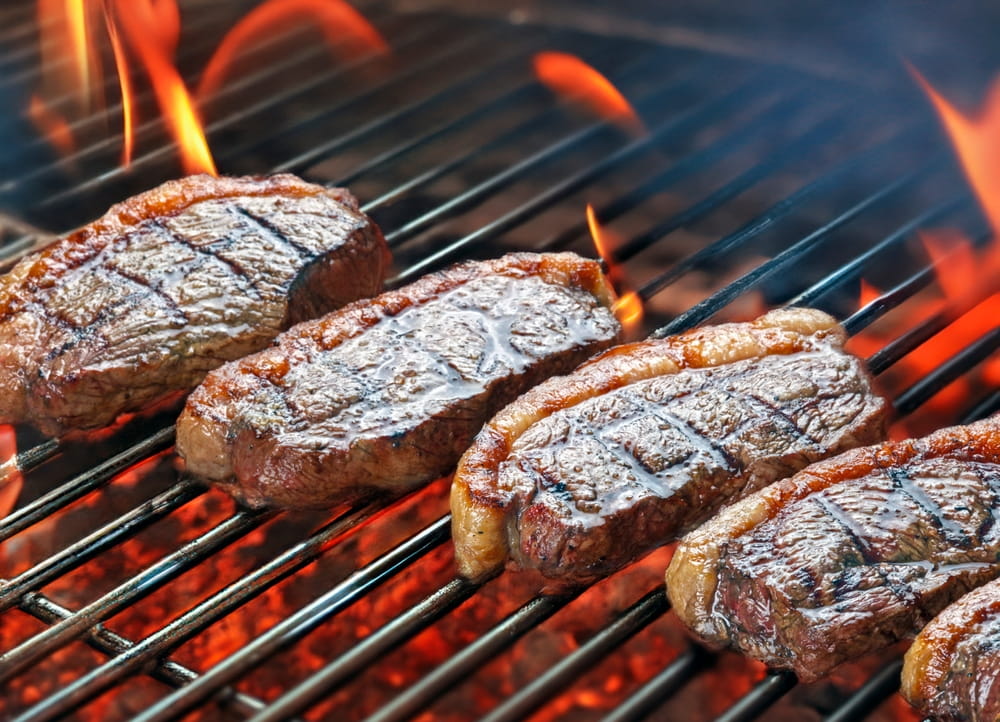
The verb asar means to roast or grill. An asador is a restaurant where meat is cooked over a grill or open flame.
Finding the right balance with this method is far from simple. In a serious asador, the cook may select a different type of wood for each ingredient and judge the cooking time almost to the second. It is precision work.
Argentine-style asadores tend to take a more straightforward approach, but the quality of the meat is usually high, and cooking over a parrilla – a grill – remains one of the most reliable ways to treat a good cut.
The finest asadores in Madrid and northern Spain are known for offering more than the familiar solomillo, or tenderloin, and entrecot. Knowledgeable diners can explore less obvious muscles and cuts from the cow or bull, including skirt steak and tomahawk.
American-style steakhouses are relatively uncommon in Spain. For serious grilled meat, an asador is generally the better choice.
Pulpería – Restaurants for Octopus Lovers
Those more interested in the sea should look for the word pulpería.
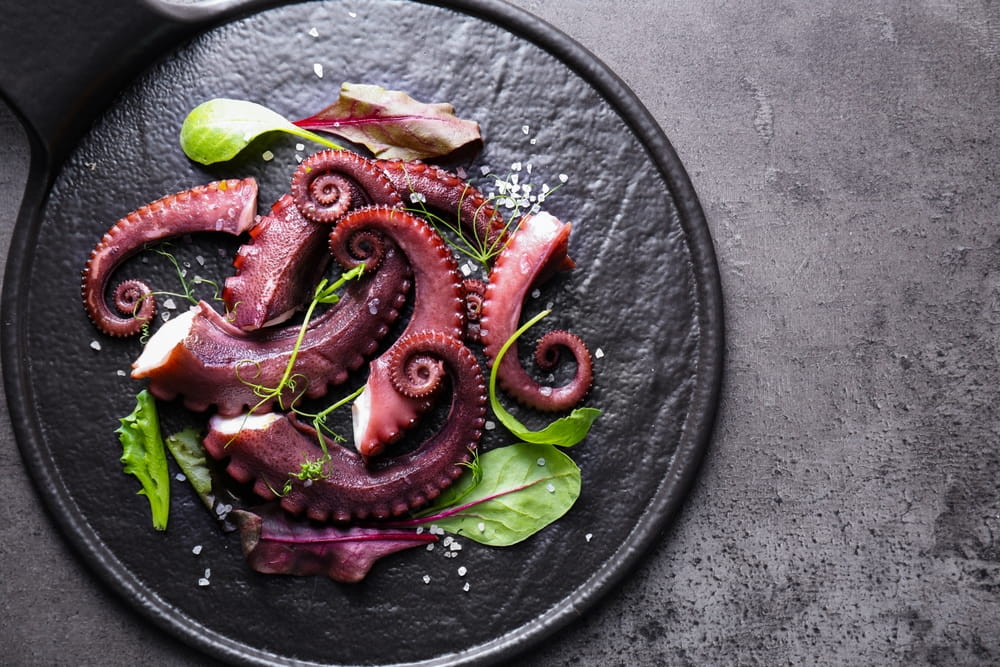
Octopus – pulpo – will inevitably feature on the menu, but it may be joined by oysters, scallops, prawns and fresh fish.
The format is most closely associated with Galicia and Asturias, where such establishments originated. Today, however, pulperías can be found throughout Spain, particularly along the Mediterranean coast and around Valencia, whose waters produce some of the country’s finest octopus.
Pulpeira de Melide – One of Galicia’s Best-Known Octopus Restaurants
One of Spain’s most famous examples may be Pulpeira de Melide in A Coruña, where the kitchen is led by Gorka Rodríguez.
Around 250 guests arrive each day to try the octopus, scallops, distinctive tortilla and other dishes. At weekends and on public holidays, the number can rise to around a thousand.
The tavern has welcomed some of Spain’s most celebrated chefs, including three-Michelin-star figures such as Jordi Roca, Juan Mari Arzak and Dani García, all of whom travelled to A Coruña specifically for the octopus.
Gorka cooks classic Galician food, which is hardly surprising. His grandparents spent many years in the business and know virtually everything there is to know about octopus.
The more difficult task, he has explained, was to combine the cooking of a traditional pulpería with something contemporary and more elaborate.
That required extensive study and experience in some of the world’s greatest kitchens, including Mugaritz, El Celler de Can Roca and Noma in Copenhagen.
Pulpería Narcea in Santa Pola
Those who do not wish to travel all the way north can sometimes find northern Spain much closer to home.
My wife and I go for octopus at Pulpería Narcea in Santa Pola.
Don Antonio Monteserín’s family arrived from Asturias more than twenty years ago and settled in the town.
At the entrance to the restaurant, you will see numerous portions of Galician-style octopus already prepared because orders for the dish arrive continuously.
The restaurant also serves excellent fish and a wide range of other dishes.
The listed prices look low, but there is one important detail: the restaurant adds 10% tax to the bill, although under current rules this amount would normally be included in the menu price.
The owners explain this eccentric practice as part of their determination to work in the old-fashioned way, preserving the memory of a time when prices were written by hand and tax was added separately.
Not every modern customer appreciates it, but regular guests are accustomed to the system. Even after the additional ten per cent, the final bill remains remarkably reasonable.
Ventas – Andalusia’s Traditional Roadside Inns
What remains to be said?
We have covered the most familiar formats, but Spain has many more words for places where people eat and drink. Some are ancient and intensely local.
As a child, I found a mysterious, thick, leather-bound book on my parents’ shelf. It was called The Manuscript Found in Saragossa.
The novel describes, in hypnotic detail, the adventures of a French officer in Napoleon’s army travelling through Andalusia on his way to Madrid.
His companions are highly questionable but irresistible to a child’s imagination: Gypsy nobles, drunkards, wanderers, adventurers, smugglers, dancers, beautiful women of uncertain virtue, demons and assorted supernatural creatures.
Despite the difficult language, I turned the pages with fascination.
The places where these characters gathered and exchanged their stories were called ventas – rural roadside inns once typical of Andalusia.
You can still come across a venta</em today if you travel through the more remote parts of southern Andalusia.
Centuries have passed, but I suspect that you may find much the same food and roughly the same company.
Spain – a Country of Roads, Restaurants and Traditions
Spain is a country shaped by roads and traditions.
I hope these notes on its extraordinary variety of bars, taverns and restaurants will prove useful when you plan your next journey.
Their number is genuinely remarkable. Spain remains one of the world’s leading countries in terms of both the total number of food and drink establishments and their concentration per inhabitant.
That is all for today. Until the next set of notes on food and wine.

FAQ
Which types of Spanish venues are best for a light meal?
For a quick bite, the author recommends traditional tascas, tapas bars and seaside chiringuitos. Depending on the venue, you may find small plates, dishes designed for sharing, homemade croquettes, Iberian ham, fish and shellfish.
What is a marisquería?
A marisquería is a restaurant or bar specialising in fresh fish and shellfish. These establishments are often lively and informal, with cold white wine or beer and comparatively accessible prices.
How is an asador different from an ordinary steakhouse?
In an asador, meat is cooked over an open fire or grill, with close attention paid to the quality of the product, the type of wood and the exact cooking time. Spanish asadores generally reflect local grilling traditions rather than copying the American steakhouse model.
What is served in a pulpería?
The defining dish is octopus, particularly Galician-style pulpo. Many pulperías also serve scallops, oysters, prawns, fish and traditional Spanish tortilla.
What is a venta in Andalusia?
A venta is a traditional rural or roadside inn associated with Andalusia. Some still operate today, preserving the food and atmosphere of the southern Spanish countryside.
Related Reading
This information does not constitute legal or tax advice and should not be regarded as a public offer.